In this year of the 250th anniversary of Jane Austen’s birth, here are three very different beginnings I have imagined for her best-loved – and my favourite – Austen novel. (Warning: some may find these offensive; Janeites, possibly also sacrilegious).
Trade
‘So, my dear Fitzwilliam, what price do you want to pay for your future sister-in-law’s virginity?’
Darcy gripped the table even more tightly. Being in the same room as this savage was bad enough; now he was being invited to barter with him, and in the most offensive and impertinent language imaginable. Darcy reddened. But the complexion of his nonchalant, bright-eyed interlocutor suffered no corresponding colouring of mixed embarrassment and anger. From the question, Darcy knew – and knew that this blackguard sitting opposite him knew he knew – that Wickham held all the cards. Only someone as devious and cynical as he could have worked out that Mr Fitzwilliam Darcy was only here because he had a strong personal interest in legitimising the relationship between Wickham and the girl he had seduced: the youngest Bennet daughter Wickham had deceived into eloping with him at the risk of ruining her reputation – and, by association, the marriage prospects of her elder sisters.
That Darcy was being forced to expiate this man’s sordid conduct with the sixteen-year-old fool was entirely down to his need to keep the door open on the possibility that he might marry one of those sisters. The rogue was so clever he had probably worked out which one as well. And knowing her value to Darcy meant Wickham could name his price. Damn him! Only once before in his life had Darcy felt so much in the power of another. And that had led to his first, unsuccessful proposal to the lady in question. If he was to keep alive his hope of making a second attempt, he would have to comply. His pride momentarily bridled. Then a pair of fine eyes flashed across his mind and his heart swelled. He swallowed, and opened negotiations.
Nonce
George Wickham likes fucking teenage girls, preferably ones from rich families. He nearly managed it with Georgiana Darcy. He got very close with Mary King. But now he is doing it over and over with Lydia Bennet, her insatiable sex drive putting her father’s impecunious circumstances out of his equally libidinous mind, thinking with his penis rather than his purse. Lydia’s second-eldest sister was pleasant enough company but far too old to contemplate in that way, despite being not yet one and twenty. Not young enough to tempt him, at any rate.
When he starts thinking straight again, he will see a way to make this pay. But for now, with the young lady coming up for air, that will have to wait.
Rights of Women
Let us take a look, dear reader, beneath the skin of this society of propriety and staged manners, to the real, if rarely acknowledged, condition of its women. Observe the want of power, property rights and independence which renders them little more than slaves. Note the distortions of their characters and relationships as they fight for husbands – and with each other; witness the competition to survive which divides sister from sister, ceding control of their lives to men without the latter having to raise a finger to assert their ruling authority. Except when the fancy takes them, and roughing the girls up a bit with a fist or a fuck now and again reminds everyone who is master and who is servant. A universal truth if ever there was one.
One of my favourite paintings, which hangs in the Tate Britain gallery, is Mark Gertler’s Merry-Go-Round. I first encountered it as a postcard on the bedroom wall of the student housemate who, soon after I moved in, was to become my life-partner for over thirty-five years (and counting). The image and colours instantly brought to mind an illustration on the cover of a book my mother used to read to me when I was very young. In my imagination, the memory of a brightly coloured carousel in a favourite book, and Gertler’s painting, are one and the same. The mind plays tricks, however, especially over such a stretch of time, and I know that it is very unlikely that a publisher would use a painting depicting the nightmarish horrors of war to illustrate a book for young children.
During my Masters in Creative Writing, the initial exhibition of Gertler’s masterpiece in 1917 was the inspiration for a short story I wrote for one of my formal assessments. My preparatory work included reading a collection of Gertler’s letters, an absorbing (and, to date, definitive) biography by Sarah MacDougall, and a 1916 novel loosely based on the artist’s early life: Mendel, A Story of Youth, by Gilbert Cannon.
The son of Polish immigrants born in Spitalfields in the East End of London in 1891, Gertler showed early signs of talent as an artist. After leaving school, he attended evening art classes where his success in a national art competition led to him to winning a scholarship from the Jewish Education Aid Society and, aged seventeen, enrolment at the Slate School of Art. There he became the contemporary of others, such as Paul Nash and Stanley Spencer, who would find fame as British artists.
In 1914, Edward Marsh, an art collector whose civil service day job was private secretary to Winston Churchill, became Gertler’s first patron. Their relationship was an uneasy one. Gertler resented the obligations of patronage, and, as the war progressed, his pacifism and conscientious objection to the conflict clashed with Marsh’s duties in the Government and his relationship with the First Lord of the Admiralty. The two broke company as Gertler completed his most famous, and anti-war, creation, Merry-Go–Round.
The painting was possibly inspired by the annual fair on Hampstead Heath, near which Gertler lived at the time. Writing to a friend about such a fair in 1915, D.H. Lawrence commented, ‘There is a fair on behalf of the wounded soldiers today, and myriads of the wounded, in their bright blue uniforms and red scarves, and bands, and swing boats, and a whole rowdy enjoyment. It is queer.’ Seemingly, Gertler may have witnessed the same scene and also thought it ‘queer’ or, if it was indeed the catalyst for his unforgettable picture, grotesquely obscene in light of what was happening on the other side of the Channel.
Having thrown over Marsh, Gertler found a more conducive and sympathetic patron – and, as it turned out, lifelong friend – in the barrister and collector, Montague ‘Monty’ Shearman. In her biography, Sarah MacDougall describes Monty as ‘broad-minded, tolerant, learned and extremely generous’. He clearly also adored the artist as much as his art: ‘Shearman found himself constantly dreaming of Gertler’s pictures, though he found it “almost impossible” in the artist’s presence to explain how deeply they thrilled him.’
If Shearman’s feelings for Gertler went beyond the purely professional and platonic, they remained unspoken and unrequited – and tactfully unnoticed by the artist himself. However, coming across a mesmerising self-portrait of the artist as I was reading Sarah MacDougall’s book, I was prompted to write this short piece based on an incident she describes in the early days of Gertler’s association with Shearman:
The Self-Portrait
In the end, the Artist is left standing with his neck framed by the distorted rim of a Roger Fry tray, violently smashed over his head by his friend, leaving it poking through like an obscene three dimensional, and breathing, surrealist self-portrait.
Gertler does not even have the excuse of inebriation to explain why he and his Russian friend, Koteliansky (‘Kot’), who has drunk enough for both of them, go berserk and trash the London pied a terre of the artist’s patron around the time the First World War was coming to an end in Europe. They do not even have to break in; they just let themselves in using the key which has been entrusted to Gertler by his kind, generous and slightly besotted friend, Montague ‘Monty’ Shearman.
Shearman’s rooms in the Adelphi Hotel had been set up for a sophisticated soiree (no common or garden ‘do’ supplies its guests with eau de cologne, after all) and were awaiting the return of the patron including, very likely, the legendary Diaghilev and half his dance company following that night’s performance at the Coliseum. In tow to the two hooligans, fellow artist, Beatrice Campbell, and her husband, Charles, are powerlessly horrified at the vandalism taking place before their eyes: the grotesque gorging and swigging of food and drink, the scattering of flowers and soft furnishings, and, over the furniture as they leap about it, the manic spattering of the eau de cologne. The vandals, hysterical with laughter and euphoria at their anarchy, abandon the scene before the ballet party arrives.
No record exists of Shearman’s reaction to the discovery of this destruction, but the identity of the perpetrators is soon known to him. Remarkably, this barrister-cum-art collector takes no action beyond asking for the return of the key, and never mentions it again to Gertler, nor breaks off his patronage or friendship.
Photographs and, more vividly, self-portraits of Gertler give us the strongest explanation for Shearman’s turning a blind eye to such an outrage – although the generally accepted belief that the drunken Kot bore more guilt as the instigator of the onslaught helped to mitigate his accomplice’s culpability. Mark Gertler, the East End prodigy of a poor, Jewish immigrant family, always had great sex appeal for men and women. His self-portraits – and his famous egotism – suggest that he was not only very aware of this but that he was not a little in love with himself as well.
One portrait, executed in 1920, a couple of years after this incident, is undeniably captivating. He stands, almost full length, his right side forward, painting in his studio. His slight figure is draped in a white shirt, its sharp collars contrasting the soft fabric which barely seems to touch his skin; indeed, it is open-necked and unbuttoned recklessly to reveal a Byronically indecent view of taut and mildly hirsute chest. Dark trousers becomingly draw attention to slim waist and shapely buttocks. The eyes, looking directly at the viewer rather than the easel in front of the figure, are more like shadows, dark and deep set; the thickness of the eyebrows match the enviable bushiness of his hair, which tapers at his temple to an irresistible vanishing point on the pale, high cheek bone. At right angles to his mouth, a crease forms part of the top line of a rotated ‘T’, the soft lips playing the reclining stem of the letter, the whole a languorous character hovering above the chin, possibly dimpled, but certainly rounded in an inviting pout.
No wonder Monty Shearman, who fastidiously only looked and never touched, was prepared to brush his friend’s indiscretion under the thick carpets of the Adelphi in November 1918.
This is an updated version of a post from 2023. The fictional account of Gertler running amok in Shearman’s apartment remains unchanged.
Photo Number One – a plumpish boy with straight fair hair, rudimentarily cut and combed, poses awkwardly at the top of three steps. He is wearing dark purple trousers (a little tight on the thigh). On his top half, he sports a lighter-coloured purple garment that today retailers like Next call a ‘zip’ or a ‘zip through’ cardigan, but which, in the 1970s, the boy’s mother called a ‘jerkin’. The boy is not standing straight but unaccountably leaning to the left, his arms a little apart from his body in a sort of oval. His smile is unmistakeably forced. The whole effect looks very stiff, very uncomfortable, very embarrassed, and not unlike how one might imagine a purple penguin would pose. Confronted by a photographer. Or his mother. Asking them, ‘Why?’ The reason, it turns out, is the occasion of the seven-year-old boy’s (not the penguin’s) First Holy Communion; the location, just outside his family’s local Catholic Church; and the purple ensemble in lieu of a suit that they didn’t do in his size and which his parents couldn’t afford even if they did.
Photo Number Two – the same plumpish boy, his straight fair hair now sporting a more sophisticated pudding-basin trim, stands, left-side on, astride a bicycle. A purple bicycle. He wears dark purple shorts (a little snug and, perhaps, just a little too short) and a jumper (or is it a jerkin? his arm is in the way) of a lighter shade of purple under which he is wearing a shirt, possibly mauve, with a nice-looking collar. He is wearing sandals. And socks. A classic fashion combination of 1970s Britain. He and his bicycle are posing on a lawn. A children’s swing (with a purple frame) is behind them. The complementary colours of swing, bike and boy contrast nicely against the green of the grass. The design of the two-wheeler is what, in less enlightened times, might be termed ‘a lady’s bike’. The stereotype is reinforced by the wide, white saddle and the large gingham-patterned saddle-bag behind, criss-crossing in white, violet and plum. It is definitely not a Racer, a Chopper or a Raleigh. On the crossbar, almost hidden by the boy’s leg, you can just make out the word ‘Typhoon’. Pleased with his own choice of seventh birthday present, however, his smile is genuine and relaxed.
Photo Number Three – the plumpish boy with fair hair stands on the same lawn, purple swing still in the background. He is wearing a homemade ‘period’ costume: regency-style knee-length breeches in dark purple above white stockings and, of lighter purple, a jacket (perhaps a little tight) with yellow braiding down the centre and across his middle. At the sleeves, and at the boy’s neck, are white lace cuffs and jabot. On his feet, black shoes have been accessorized with decadent homemade bows of unmistakeable aluminium foil. The boy is not smiling, and his screwed-up eyes and crimson cheeks suggest he has just been crying. Nowhere to be seen in the photograph is the adapted black beehive wig, with ponytail attachment, which the boy briefly enjoyed wearing to complete the costume but then had to be abandoned in the face of his father’s shouty objections to his wife that, over his dead body, was any son of his going out looking like a big Jessie, fancy-dress party or no fancy-dress party.
***
I have moved my mother into a care home. I am clearing out her flat. Sorting through the bits of the past: what to keep, what to throw away. I find my first ever photograph album. From the pictures of my sixth, seventh and eighth birthdays, strewing the album in no logical chronology, I can deduce that its contents span the years between the summers of 1973 and 1975.
The 1973 birthday photos are among those of our family holiday to Jersey that year. Reached by my first ever flight on an aeroplane, and accommodated in a guest house, it was a truly exotic departure from the usual miners’ fortnight caravan on the south Wales coast. No wonder the loan he had to take out to pay for all of this burdened my father for many years afterwards. I pose with my presents in the bay window of our family room overlooking St Aubin’s Bay. It would all be idyllic if the flush in my cheeks didn’t jog the memory that my father had just been shouting at me for something. Again.
The album also holds the photographic evidence that my 1974 birthday was the first and only party to which I invited school friends, as they had been inviting me to theirs during the previous year. This was a one-off because, firstly, while always having a birthday in the middle of the school holidays was great, many friends were not around at that time to be able to come to a party and we were often away on holiday in any case. But, secondly, I was usually too deeply embarrassed to have friends round to my house and strived to ensure that the Venn diagram circles of my separate worlds of school and family (especially my father) seldom overlapped. But this year, with a few weeks to go before the arrival of my new brother, and the inherent strain of this unplanned event on the family finances (the further postponement of my mother’s return to work having an unwelcome impact upon the ability to meet the repayments of the ongoing loan for the previous year’s Channel Island extravagance) meant an inescapable staycation. And so it happened that year that I got a very self-conscious birthday party at home and a lovely purple bike. At least the former wasn’t fancy dress.
The photograph album had been bought for by my godmother (and favourite cousin) for my eighth birthday in 1975 because the present from my mum and dad that year was the rather alarmingly styled Polaroid Colour Swinger Land Camera. This turned out to be only one element of one of my most memorable ever birthdays. For starters, the camera, was an Instamatic. As the photographer, I could see my pictures almost as soon as I had pressed the shutter button. Unlike later models which would automatically spew out the print on which an image slowly materialised, this mid-70s version required you to pull out manually the print contained within a sheath of photographic paper. You then had to hold it secure (as the instructions advised) in the warmth of your armpit while the layers of film emulsion and developing agent inside the cover created the image sixty seconds after the light, let in by the briefly open shutter, hit the film, triggering the whole chemical transfiguration. The not unpleasant synthetic smell as you peeled off the photo a minute later only enhanced the thrill of this technological magic.
Compared to the usual waiting of days, if not weeks, for Boots to send your rolls of film away to be developed in another part of the country, achieving the same result in a matter of seconds under your arm was nothing short of a miracle.
The camera was bought in a specialist shop on the streets of Chiswick and not in the shopping centre near my home in south Wales. Another memorable treat of this birthday had been a family day trip to London, my father driving for the first time ever to the Big Smoke, and in our new Morris Marina. For some of the journey I sat in the front passenger seat, watching in terrified excitement as the speedometer touched 100 mph, my father showing off the power of the car’s engine, and displaying a rare instance of his own daring. We were wearing seatbelts even though it was not yet the law to do so, as befitted my Dad’s more usual caution and aversion to risk, and because we’d all been persuaded by the advice of that reliable face of probity, Jimmy Saville OBE, to ‘Clunk, Click. Every Trip’. Parking for free on a side street of the London suburb, just off the M4, and miles out of town, my father avoided the daunting city-centre traffic and put us in a good place to execute a quick getaway back to Wales later that evening.
This parking arrangement meant a further journey into central London via the Underground – another thrill of the birthday and a first for me and my sister and brother. However, my own excitement was initially laced with trepidation. Exactly five months before, on February 28, Leslie Newson had inexplicably driven his Northern Line train into the end wall at Moorgate Station, the vehicle apparently accelerating as it sped along the platform. Forty-three people were killed and over seventy injured. Four days after the calamity, Newson’s body was the last to be removed from the wreckage, his driver’s cab compressed from its normal depth of three feet to a mere six inches, his decomposing remains crushed by a correspondingly sickening proportion.
The recent memory of this disaster played heavily on my mind as we rattled through the dark tunnels of the Tube, but with our continued survival at every passing station my enjoyment of the experience slowly surpassed my fears and I marvelled at the speed, the noise and the smell. Back above ground, we saw a lot of tourist London that day: Buckingham Palace, Trafalgar Square, the Tower of London, Downing Street. Puzzlingly, the photo taken of me standing outside the famous Number 10 door was either over-exposed or lost, an annoyance to me when I later developed an obsession with politics – and with the first female inhabitant of that famous address. We even took a black cab at one stage and, at the end of the day, ate out at a restaurant (probably a Berni Inn) before the drive home.
It was a very good birthday and – with the camera – must have cost my parents quite a bit. But then, like the year before, there was going to be no summer holiday this year either. With the cost of the new car on top of everything else, money was still short. This day trip to London, lavish to my eyes, was nevertheless a cheaper way to compensate for my birthday not being celebrated during a week in a caravan at Porthcawl, as it so often had been. Thinking about it now, I suspect the reason the day trip replaced the week away was because my Dad worked his annual leave entitlement to get the extra cash, sacrificing his time off for the financial stability of his family.
At some point on the journey home my father started fishing for the expression of thanks from me which I would have given unbidden in my own time, probably when we had finally got back home. For some reason, I played dumb. I think what irked was my instinctive understanding of his self-centredness and a neediness to be acknowledged and praised for his own generosity – like Ebenezer Scrooge, as the ‘founder of the feast’, at the Cratchit’s meagre Christmas dinner. Perhaps, showing a teenage attitude well ahead of my years, I think I was just embarrassed and feeling awkward at being asked to say ‘thank you’ as if I were a four-year-old rather than as the mature young man twice that age that I saw myself. My truculent reluctance to play ball inevitably sparked one of his trademark explosions and cast a pall over what had been a lovely day. Of course, with hindsight, I should just have given him what he wanted. But I didn’t. My disdain for him, and his frustration and always just-under-the-surface anger with me (the real reasons for which were not to going to come out – literally – for many years), were an ominous sign of the much worse that was yet to come in our infamously fractious relationship.
Until writing this piece, I had always puzzled over my complicated relationship with my birthday – both wanting and shying away from the attention as well as hating the pressure to perform for those using gifts and treats as a substitute for real love and acceptance. It has also reinforced my understanding of the contradictions of my father, even if I cannot forgive them. Never were the lines from Wilde’s The Ballad of Reading Gaol more apposite:
Some love too little, some too long, Some sell, and others buy; Some do the deed with many tears, And some without a sigh: For each man kills the thing he loves, Yet each man does not die.
My relationship with Oscar Wilde’s statement colour is, thankfully, untainted and as straightforward as it has always been. I love purple. Happy birthday to me!
You made me acknowledge the devil in me I hope to God I’m talking metaphorically Hope that I’m talking allegorically… …I’ve never known a girl like you before
Edwyn Collins, A Girl Like You (1994)
‘On my parish visits, I have been shocked,’ Father Martin pauses for dramatic effect before continuing in his unforgiving Ulster firebrand volume and delivery, ‘shocked, I repeat, to be confronted on the walls of some homes, not by images of our Lord or His blessed mother, but by lewd and indecent pictures masquerading as art.’
Up until he spat out this final word as if it had been the devil himself, I had been blocking out the priest’s ranting sermon as I did every Sunday at Our Most Holy Redeemer, the church serving the Roman Catholic faithful at the lower end of the Welsh valleys’ town of Pontypool. But this sudden dramatic denunciation of the unwitting (but unnamed) pornographers of the parish had me immediately sitting straight-backed on the church bench and looking directly into the small, dark, piercing eyes of the not unhandsome curé, the smooth skin of his rounded cheeks betraying a hint of cherub-red. The cause of this coloration, whether from anger, embarrassment or excitement, was unclear. And now, as I stared, as often happens when someone declaims from a stage or platform, it felt as though the beady eyes of the speaker had fixed their glare on me; were boring into me, as if me and my conscience (or, if I had one, my soul) were the objects of his accusation and wrath.
Typical of my then religion to make the innocent feel guilty, I quickly lowered my gaze. It was then that I became aware that the priest’s words were having a tangible effect on my father, sitting next to me in the pew. I could sense his whole body stiffen; hear his breathing become suddenly more audible and short; feel the force being applied to suppress what sounded like a painful cough. I was not surprised. My father was always a prude – commanding us to ‘shut eyes!’ at any kind of nudity; tuttingly switching channels at the first hint of anything risqué; leaving the room if a taboo subject, like childbirth, was ever mentioned. No wonder, then, that this allusion to something carnal, in front of his family, and, worse, in such a public place and spiritual context, was going to get him shifting uncomfortably in his seat.
After further admonishment on the kind of artwork inappropriate for the decoration of good Catholic family homes (though presumably acceptable for the ceiling of the Sistine Chapel), the robed celibate blessed his congregation (well used to being unsettled by his weekly diatribe dressed up as homily) and got on with the rest of this familiar weekly theatre of ritual.
‘The Creation of Adam’ by Michelangelo
I cannot remember how soon afterwards – whether on the car journey home, or while we sipped our traditional Sunday morning coffee with its splash of rum, or later as we tucked into the unfeasibly overcooked roast and overboiled vegetables – that I noticed my father was bristling. Being a man quick to temper on the least provocation, this was not unusual. But while his ire was normally sparked by one of us, his three children, knocking over a beaker of squash, say, at the dinner table, or my mother, mercilessly crunching a gear change in the car, or some trade union leader or Labour politician spouting pinko nonsense on the telly, this was different.
Somehow, I could tell that my father was angry because he was embarrassed. And it all seemed to have something to do with Mass that morning. The inevitable explosion at my poor mother wasn’t long coming.
‘No one tells me what I can and cannot put on the walls of my own bloody house. Who the hell does he think he is? For God’s sake! there’s a picture of the damn Pope on the wall opposite!’
And as my father raved profanities, the truth dawned.
On one of the walls of our sitting room, hangs a framed parchment, sent from the Vatican in 1964, a papal blessing of my parents’ marriage that year, signed by Pope Paul himself, his photo at the centre, hand poised in benediction. Directly opposite the pontiff’s picture, above the fireplace, on the wall immediately facing anyone who enters the room, hangs a framed print from Boots the Chemist, the original also painted, coincidentally, in 1964. Depicted in a shaded woodland setting stands a sultry young woman, long black hair swathed over a naked shoulder, a hand caressing the ridged bark of a tree trunk, dark eyes looking right into those of the viewer. In our house, those smouldering orbs constantly burned into the facing portrait of the Vicar of Rome for some thirty years. And, on one specific occasion, clearly stirred the emotions of a sex-starved cleric dropping by for tea. This was Tina.
Father Martin’s sermon had been directed much closer to home than I realized in church that morning. For it was our walls that were apparently daubed with filth; ours, the guilty home; we, the accused pornographers; poor Tina, the painted Jezebel.
I will never know if anyone beyond my family ever made the same connection. For my mother’s sake, I hope not. At the time, I felt defensive of Tina and, unusually, in sympathy with my father’s outrage that anyone, even a priest, should proselytise upon and dictate what should and should not adorn his walls. After all, a Welshman’s home was as much his castle as that of his English compatriot’s. There were, surely, far worse outrages to taste in the orange, brown and mustard swirls of our wallpaper, carpets and lampshades than a mass-produced, mildly erotic picture by a minor twentieth-century British artist, available to millions from a popular high-street pharmacist. But gaudy excess being a hallmark of the insides of many Catholic churches, and an obsession with sex equally characteristic of the insides of the heads of their clergy, it is no surprise that it was not my conservative parents’ 1970s psychedelic interior décor that got the knickers of our parish priest into such a twist but rather their kitsch, one and only, toe-in-the-water dip into the pool (or swamp) of sexual liberation in which the era notoriously swung.
The item of kitsch in question is now an iconic image of the 1960s, painted by little-known British artist, Joseph Henry (‘J.H.’) Lynch. ‘Tina’ and other paintings of similar subjects and with suggestive and anachronistic titles such as ‘Woodland Goddess’, ‘Nymph’ and ‘Rose’ (the latter ironically, the name of my mother) were so popular that prints sold in their thousands if not millions in places such as Boots in the ‘60s and ‘70s. Long after I had left home and developed an appreciation of the retrobilia of my childhood, I was thrilled to find the cover of Edwin Collins’s 1994 single, A Girl Like You, sporting the image of J.H. Lynch’s ‘Tina’ which had gazed upon me and my family in our front room for almost three decades.
In recent weeks, my brother and I have been sorting through our Mum’s flat after her move to a care home where, because of her dementia, no memory of that infamous Sunday morning (nearly) naming and shaming remains, either to upset or amuse her. Among a mass of ‘60s and ’70s kitsch, we come across the Pope’s blessing, though, frustratingly, not his voluptuous roommate, whose picture did not survive my parents’ move from their first family home twenty years before.
But my brother does send me a photo he found on Facebook of a typical 1970s home. Flanked by curtains of floral browns and yellows, and above a teak cabinet displaying a ‘Babycham’ bambi and a tin of ‘Quality Street’ so large as to prove incontrovertibly that confectioners have been shrinking the size of their products shamelessly ever since, hangs ‘Tina’. And this was the catalyst for a return down the rabbit hole in which I last got lost when Collins’s hit single was released in the 1990s.
This time, I discover that ‘Tina’ and her artwork friends had made appearances in scenes in Stanley Kubrick’s even more iconic – and surely far more controversial – A Clockwork Orange (1971), and that Stella McCartney had used Tina’s image in her A/W18 collection, showcased in Paris in 2018. The reviewer in the fashion and culture magazine, ‘AnOther’ noted that McCartney’s use of the art work, ‘glimpsed out from beneath blousy layers of tulle and lace…their latent sense of eroticism [seeming] to hint of the private desires that a woman might harbour’ and that the prints ‘spoke of the alluring appeal of kitsch – of bad taste made good’, McCartney herself acknowledging ‘the charm of “something a little bit wrong”’.
‘Tina’ and ‘Water Nymph’ (and Malcom McDowell) in A Clockwork Orange
So there it was. My father would have felt vindicated. ‘Tina’ is, perhaps, ‘a little bit wrong’ but, over the course of time, and seen through the lens of retrospective and nostalgia, definitely ‘bad taste made good’. However, had Father Martin been aware at the time of his sermon that not only was ‘Tina’ on permanent exhibition in our living room, but on the wall of the set of a notorious film banned from screening in the UK for a quarter of a century, the padre’s outrage might have blown his piggy eyes right out of his biretta-ed bonce.
Postscript (spoiler alert to my brother)
I am thinking about spending a lot of money on Etsy: ‘Lovely Vintage J.H. Lynch ‘TINA’ 1960s Print in Original Frame. Excellent Condition. Rare Find.’
A 50th birthday gift for a sentimental relative, perhaps, doubling up as a house-warming present for his new flat? Or to keep for myself? I’m not sure. But God knows what we are going to do with the Pope.
In the opening paragraph to his LRB review of Gareth Greenwell’s Cleanness (2020), Edmund Gordon, lecturer in Creative Writing at King’s College London (my alma mater, as it happens) writes:
In U&I (1991), his book about John Updike, Nicholson Baker imagines explaining the appeal of Alan Hollinghurst’s ‘The Swimming-Pool Library’ to his literary hero. ‘You know, once you get used to the initially kind of disgusting level of homosexual sex, which quickly becomes really interesting as a kind of ethnography, you realise that this is really one of the best first novels to come along in years and years!’ But Updike couldn’t get used to the sex. Reviewing Hollinghurst’s third novel, ‘The Spell’, in 1999, he complained that ‘our noses are rubbed, as it were, in the poetry of a love object’s anus’ and about the author’s habit of recording ‘penile sizes, tilts, tints and flavours … with a botanical precision’. Never mind that Updike’s own work displayed a comparable attentiveness to the shapes and shades, tensions and textures of female genitalia; that was an altogether more meaningful business. ‘Novels about heterosexual partnering … do involve the perpetuation of the species.’ How this was involved in the oral sex in Couples (1968) or the anal sex in Rabbit Is Rich (1982) wasn’t explained.
When I came across this tongue in cheek swipe at the homophobia of Baker’s biographical subject (and Gordon’s own more explicit hit on Updike’s bigotry and hypocrisy – though resisting the temptation to play puns with his surname, as I have done in my head) it seemed a fitting way to begin this retrospective of the novels of Alan Hollinghurst which I began at the start of the year when I saw that the Booker Prize-winning writer’s seventh novel was due for publication in the autumn.
So it was that, a week ago, I finished reading The Sparsholt Affair (2017), the last and most recent novel in Alan Hollinghurst’s oevre of six. I have been a fan of the writer’s work for many years. Hollinghurst is arguably the UK’s most accomplished living fiction writer and certainly its best living gay novelist. ‘Gay’, not just in the author’s own identity but also in his bold writing of content, characters and stories which reflect the world in which I live but do not always see in much of the heteronormative worlds I read. Gordon’s review of Greenwell’s novel continues in a vein with which I have much empathy:
Garth Greenwell was born in 1978 and first read The Swimming-Pool Library when he was twenty (around the time Updike was reviewing The Spell). He described the ‘immense sense of permission’ it gave him: ‘There was a great liberating thrill in reading … a book that was so unapologetic in its representation of men having sex – pleasurably, promiscuously – with other men. It felt radical in its indifference to the moral judgments of straight people.’
This is not a review of the novels. That would take far too long and has been done many times already, in other places, and by better critics than me as any online search in the archives of major British and US newspapers, and literary journals such as the London Review of Books, would testify. However, I am going a bit ‘Top of the Pops’ with a very lowbrow ‘hit parade’ of my second reading the novels, some now ‘charting’ higher, lower or just the same since I first encountered them.
Number Six: The Spell (1998)
No change. Hollinghurst’s third novel has always been his weakest in my opinion and it remains so, even after an admittedly more favourable reading second time round.
My memory of the novel as a thirty-one year old (and why it grated somewhat) was that it was strewn with too many middle-aged men getting off their faces on the latest designer drugs (and getting off with lovers young enough to be their sons) in an endlessly unrealistically world of hedonism and narcissism which left me yawning for a break rather than panting to join in; a world I had briefly flirted with in my twenties and long abandoned for a (mostly) sober life of monogamous domesticity.
My re-reading was far more enjoyable than I had expected and I found that my memory had not serve me well. Yes, there are nightclubs, and drugs and unlikely sexual pairings but they do not predominate as I thought they did; I could also now appreciate their presence – and the point – more than I did in my priggish thirties. My criticism this time round, and why the novel remains at numero six, is that it is too short and underdeveloped; that there are two main characters (Robin and his younger ex, Alex) about whom the novel never makes up its mind is the more important or interesting, or into whose consciences and experiences to take the reader more deeply. I was left wanting to know more about both and/or wanting the novel to decide which was the main man.
The latter itself is has been a bit of an issue for Hollinghurst, of course. The Spell has few women characters, and none that is fully developed, a criticism often levelled at Holloinghurst’s early novels. After this, his third, the charge had clearly gone beyond a niggle and in the next three books he undoubtedly tries harder with the ladies.
With The Spell, I also wondered whether Hollinghurst felt under pressure to produce something more quickly for his publishers after his second hit, The Folding Star, four years earlier, had taken six years to succeed his debut triumph, The Swimming-Pool Library. We have all now become accustomed to Hollinghurst taking his time, but this was still in his pre-Booker winning days, when he probably still felt he had to dance more promptly to his publishers’ tune.
Number Five: The Sparsholt Affair (2017)
I loved it when I first read it in 2017 and, at the time, it would probably have been in my top three. I remember not being able to put it down. But that was the trouble, I now realize after my return visit. Following an outstanding opening section, and intriguing second, I couldn’t wait to read the remaining three parts, the whole quintet spanning the novel over some seventy years or more. What I’d not appreciated first time round was that this urge to read on and to find out more is ultimately frustrated, leaving the reader unsatisfied and with a feeling of, well, meh. The ongoing lives of the main protagonists, introduced as undergraduates doing their bit for King and country in the early 1940s, scouring the Oxford skies from College roofs for German bombers in between formulating intriguing relationships among themselves, are only ever obliquely fleshed out in the subsequent sections. In fact, it often feels as though they have been deliberately hidden or avoided in an authorial game that goes too far, is too clever by half, and which ultimately irritates rather than entertains.
The main characters of that wonderful first section – David Sparsholt, Freddie Green, Evert Dax, Jill Darrow, Peter Coyle – are never bettered by their reappearances later on, or by those who replace them, not even the book’s main protagonist, Johnny Sparsholt, who remains underdeveloped after a promising introduction in part two. This is a novel of omission and I cannot disagree with the conclusion of critic Adam Mars Jones (2017) who bemoans the opportunities lost or deliberately avoided in the sidelining of potentially bigger stories (such as the eponymous ‘affair’, at the centre of which is the magnetically enigmatic David Sparsholt, father of Johnny) in favour of the less dramatic tales we are left with:
By the end of ‘The Sparsholt Affair’…the book contains all the elements required for a generational saga, though it fastidiously abstains from assembling them. There’s no sense of a symphonic development either. Plot climaxes, if they come at all, are displaced onto minor characters…Dramatic events take place in the gaps between sections…The book has turned its back on the road it seemed to mark out for itself, and readers are shielded from vulgar drama. But if everything important is relegated to the peripheries or takes place in the gaps between sections, what’s in the centre? Is there really no need for one?
Numbers Four and Three. Or Joint Third.
In the middle, I place The Line of Beauty (2004) and The Stranger’s Child (2011). I can’t decide which way round.
The former, Hollinghurst’s great satirical swipe at the politics and hypocrisies of the 1980s (including an unforgettable appearance of a dancing Prime Minister, Margaret Thatcher) won him the Booker Prize. The latter, a tale of a Great War poet (loosely based on Rupert Brooke) whose life and legacy reverberates down the decades, didn’t even make the shortlist, if these things matter. I definitely expected to continue to prefer The Line of Beauty. I was surprised, therefore, to find myself not as bowled over by it as my memory (and its critical acclaim) suggested I would. In contrast, I was delighted to discover how much I enjoyed my reacquaintance with TheStranger’s Child.
This could simply be explained by context and environment: I read the latter the first time round over the course of two 12-hour flights between London and Kuala Lumpur; the book in hardback; me in economy, and at the mercy of my eight-year-old son’s need for periodic attention and entertainment. Taken together, these were hardly the most conducive circumstances in which to read a book of five hundred and seventy-six pages.
Re-reading The Stranger’s Child (this time, sensibly, on a Kindle) was a surprising pleasure. With stories and characters weaving through a century of time, in structure and characterisation, there are hints of Ian McEwan’s Atonement, something else that had worried me. However, the Hollinghurst round two turned out far better than I had remembered, and much better than I remembered the McEwan (though who knows how I would react today to a re-reading of that acclaimed novel?) The story/ stories never wain; the characters sustain interest; and there are more, and more finely drawn, female characters, than in Hollinghurst’s other novels; there’s also less explicit sex. The latter was a matter of indifference to me, though it made a change to experience the tantalising suggestiveness of intimacy rather than the more wham, bam approach of some of the other novels. Both varieties are handled with consummate skill by the writer – and equally enjoyable to read, of course. Which brings me, rather appropriately to the final (climactic?) Top Two.
Number Two: The Folding Star (1994)
This is the story I remember reading avidly on the Tube, strap-handling through evening rush-hour as well as more civilly seated in the early mornings, as I journeyed back and forth under the Thames to get to and from the school where I was teaching English in my first job in the profession.
Without giving too much away, it concerns (would you believe?) an English teacher, Edward Manners, who, disaffected with life, moves to a Flanders town to teach two students: Marcel, plodding and plain; Luc, gifted and beautiful. Both, for different reasons, are not attending the school which Manners’s digs overlooks. Through his emerging friendship with Marcel’s father, who curates a museum of paintings by a famous Belgian symbolist, Edward learns about the twilight worlds of both painter and curator, while the reader enters into the vortex of the protagonist’s infatuations and obsessions, past and present.
The New York Times Review of Books commented that
You could read this novel as a miniature ‘Remembrance of Things Past’ or as an expanded ‘Death in Venice’, or as a homosexual ‘Lolita’.
Peter Kemp, writing in the Times Literary Supplement, said
Even in its sexiest moments, it never loses its intellectual poise. Dry witticisms intersperse sweaty couplings…’The Folding Star’ is a novel of considerable breadth. What gives it its depth is the candour, wit, sensuous immediacy and melancholy intelligence applied to it.
I enjoyed my re-read enormously and, because my memory had, again, played tricks with me, I found myself as eager to turn the page as I did in 1994 and was surprised a second time by the revelations and how things turned out.
Number One: Swimming-Pool Library (1988)
The joy of having not read Hollinghurst’s debut novel for over thirty years is that it was genuinely like meeting it for the first time. Set in London in 1983, Will, is a privileged, gay, sexually irresistible (and insatiable) young man who saves the life of an elderly aristocrat, a chance meeting that will lead to a job offer, the uncovering of a fascinating, untold story and a re-evaluation of Will’s family history. The Sunday Times says of the novel that
The tautness and energy of Alan Hollinghurst’s novel derive from its ambiguous status as it shimmers somewhere between pastoral romance and sulphurous confession, between an affectionate and credible rendering of contemporary mores and lurid melodrama…classic English prose…surely the best book about gay life yet written by an English author.
The New York Time Review of Books that The Swimming-Pool Library
Beautifully welds the standard conventions of fiction to a tale of modern transgressions. It tells of impurities with shimmering elegance, of complexities with a camp-fired wit and of truths with a fiction’s solid grace.
As I wrote in an earlier post, I just think this book is a gloriously joyful and equally wonderfully written story about worlds and characters that probably could only exist in the pages of fiction but nevertheless feel so real that you could (and certainly want to) touch them. Wow! A Number One hit indeed.
Our Evenings, Alan Hollinghurst’s seventh novel, is published On October 3 2024.
From the publishers:
Did I have a grievance? Most of us, without looking far, could find something that had harmed us, and oppressed us, and unfairly held us back. I tried not to dwell on it, thought it healthier not to, though I’d lived my short life so far in a chaos of privilege and prejudice.
Dave Win is thirteen years old when he first goes to stay with the Hadlows, the sponsors of his scholarship at a local boarding school where their son Giles is his contemporary. For Dave this weekend, with its games and challenges and surprising encounters, will open up heady new possibilities, even as it exposes him to Giles’s envy and violence. As Our Evenings unfolds over half a century, the two boys’ careers will diverge dramatically, Dave a gifted actor struggling with convention and discrimination, Giles an increasingly powerful and dangerous politician.
Our Evenings is Dave Win’s own account of his life as a schoolboy and student, his first love affairs, in London, and on the road with an experimental theatre company, and of a late-life affair, which transforms his sixties with a new sense of happiness and a perilous security; but it is also, very movingly, the story of his hard-working widowed mother, whose own life takes an unexpected new turn after her son leaves home.
Both dark and luminous, poignant and wickedly funny, Alan Hollinghurst’s new novel gives us a portrait of modern England through the lens of one man’s acutely observed and often unnerving experience. It is a story of race and class, theatre and sexuality, love and the cruel shock of violence, from the finest writer of our age.
I have just read ‘Our Beautiful Scars’ (2017), the second collection of poetry by Jane Seabourne. As well as being a writer, editor and mentor, Jane is a teacher – and, significantly for me, my former A Level English teacher at Pontypool College in the 1980s. We haven’t met in person for nearly forty years but, having re-established contact more recently, we are now in email communication several times a year. Having followed Jane’s footsteps into a career as an English teacher myself for nearly thirty years, today her Pied Piper personality (charismatic not sophistical), as well as her writing, inspire me as I try my hand at creative writing in my teaching afterlife.
Many of the poems in the collection reflect Jane’s experience growing up, like me, in the Eastern Gwent valley of the Afon L[l]wyd, the fast-moving north-south river sourced in the former mining town of Blaenavon which thirteen miles later flows into the River Usk at the former Roman settlement of Caerleon. In between, the short, sharp, shock of its waters speeds by the villages and towns of Abersychan, Pontnewynydd, Pontypool, Llanfrechfa and Cwmbran.
In the opening poem, ‘Sheep’, the speaker tries to describe to a child where she grew up, a place through which ‘a grey river/ front-crawled its way to the sea’. That down-to-earth verbal phrase is typical of Jane’s style which, as one reviewer says, has an ‘economy and directness of language, and accessibility’ which is not ‘flamboyant or showy’ but which shows a ‘quiet precision of language and observation’ (George 2017).
Jane and I were educated at different times at the respective girls’ and boys’ grammar schools in Pontypool – ‘Ponty’ as she colloquially styles the town in the poems. The schools stood on opposite sides of the valley, the distance, river and town planners keeping their respective pupils (the heterosexual ones, at least) more than a deterring arm’s length apart. The importance of education and educators, and of becoming teachers ourselves, are themes to which Jane returns more than once in this collection: the experiences and people that leave impressions – some of them ambivalent, perhaps, like the oxymoronic beautiful scars of the book’s title – on our memories and psyche.
The influence of women, especially female teachers, in the poems resonates particularly strongly with me. At Jane’s time at ‘The County’ most if not all of the predominantly female staff would have been single, marriage forcing women to resign their employment and leave the profession even up to the progressive 1960s. By the late 1970s, at ‘West Mon’, my boys’ only alma mater, female staff were in a minority, but at least by then allowed to have husbands without losing their jobs.
In ‘Miss Buss and Miss Beale’, an anonymous satirical rhyme about the two famous nineteenth century pioneers of women’s education, Frances Buss and Dorothea Beale, serves as epigraph to the poem’s reminiscence about the speaker’s own teachers, all of them titled with a spinsterly ‘Miss’.
Miss Buss and Miss Beale, Cupid‘s darts do not feel. How different from us, Miss Beale and Miss Buss.
The opening stanza is a tongue-in-cheek smile at the romanticized way these teachers were talked about by their pupils, generations of the latter relaying a made-up history like the best, adoring but gossipy, Brodie sets:
Their fiancés were blown up in The War
a story passed down to new bods
when we first started at the county school for girls –
and though they nearly died from grief
our teachers devoted their best years to teaching us –
A series of appreciative memories of these selfless professionals culminates in the speaker’s praise for one of her English mistresses. Teaching her charges the superiority of fiction over reality is the resplendently named, Miss Aurella Jones
who showed us that Richard Hannay or Sexton Blake
would turn out in the end more lasting
than something as easily combustible as a man.
Miss Aurella (known thus familiarly among the girls – though obviously not to her face – to distinguish her from all the other inevitable Miss Joneses in the Welsh valley institution) was a muse to the schoolgirl, Jane. In her turn, my teacher (radically – and thrillingly – ‘Jane’ rather than ‘Miss Seabourne’) was an inspiration to me, not least for introducing me to a view of the world seen though a progressive, feminist, and mildly satirical and humorously irreverent prism which, while not changing my politics at the time, did give me the values that would underpin so much of my reading, analysis and teaching of English literature in the future. And much of my life in general.
In ‘Enter the Teacher’, facing her first class of the academic year in a room of thirty-four what we would now call ‘Year 11’ boys (aged fifteen or sixteen), a newly-qualified teacher feels a sense of imprisonment and vulnerability that mirrored my own feelings among a class of similarly aged pupils at Woolwich Polytechnic School for Boys in the final term of my PGCE year over thirty years ago. The poem’s speaker notes, grimly, that,
one has Doris Day written on his ruler
the other thirty-three – she will discover –
believe books are for snobs, poofs or women.
Reading the poem today, I cannot help but feel closely aligned to the Doris Day boy and the other bookish stereotypes, but bristle at the speaker’s acute awareness of her unwelcome presence (and isolation) in the male-dominated boys’ school, barely hidden by a Head of Department:
who wanted his junior English teacher
to shave twice a day and know the off-side rule
Her sense of solitary confinement is confirmed towards the end when she finds herself, a copy of ‘Stig of the Dump’, and a packet of Benson and Hedges, hiding (or is it escaping?) in the only female toilet at the back of the cleaners’ ‘mop and bucket room’.
There are more laughs in the poem ‘…33, 34, 35…’ which satirizes the idealistic aims of the ubiquitous school trip through a teacher’s lasting memories of the more prosaic reality:
We have organised cultural outings on Mondays –
the universal closing day for museums
deprived teenagers of slot machines at Service Stations
disappointing them with Rembrandts and Picassos
But the ‘scars’, again, are mixed. While the teachers have ‘bailed students from foreign police stations, / armed only with O level French’ they have also,
dried tears; mended broken hearts;
cured homesickness with doughnuts;
deployed sick bags at the exact moment of need.
And some of the scars are very beautiful indeed, cutting deep, invoking tears, though not of pain:
We have watched as landlocked kids
Saw the sea for the first time and rejoiced.
In ‘…and goats’, Jane celebrates eccentricity, and the broadening of horizons, epitomized by the goats’ milk brought to work by the new head librarian which, as well as galvanizing the tea, is a catalyst for other revolutions: taking the lid off the loaning of eighteenth-century so-called ‘erotica’ (such as ‘Fanny Hill’ – was it the content or merely the title that gave the original offence?), and the ripping up of the ‘No Talking’ signs. And, possibly most shockingly of all, by the enjoyment of ‘half and half’ with a curry at the new Indian in the flesh pots of ‘Ponty’: not a euphemism for a three-way orgy (not in Pontypool, please!) but the signature south Wales double carb accompaniment of rice AND chips.
In ‘A: A Long Weekend’, Jane takes her most vicious satirical swipe at the insistence that teachers of many years’ experience and in all disciplines prove that they can do sums in order to continue to do what they had been doing successfully for years. The speaker recalls the hours spent at her father’s knee, practising quadratic fiddle-dee-dee and other nonsense, finally to get her Mathematics O Level, the certificate for which she will eventually dig out to prove to a faceless bureaucrat that this highly competent – nay, brilliant – teacher of English Literature need not sit ‘Numeracy, level 2’ (FFS!) to continue her extraordinary magic with minds and words. For me, it recalls the excruciating tear-filled torture of my father pummelling into me the mysteries of long division which, aged nine, he insisted my school ought to have taught me by now. And in a cruel instance of déjà-vu, inflicting the same abuse, three years later, to an equally distressed younger sister. She, later, also taught by Jane, though not appreciating the privilege in quite the same way her older brother had.
‘Our Beautiful Scars’ is more than a tribute to female school teachers and the importance of academia. It’s an homage to women who pass on knowledge and learning to their sisters (and a few brothers) of, among many things, the mysteries of the universe; the knitting of mittens worn by the grammar school girls desperate to escape provincialism; the baking of scones according to the tried and tested recipes of mothers, grandmothers, aunts and cousins; the enjoyment of ‘Middlemarch’, ‘Paradise Lost’ and ‘Pride and Prejudice’. I am certainly eternally grateful to the women (mother, aunts, cousins, teachers, colleagues, Jane Seabourne), and a few men, for the beautiful scars they left imprinted deeply in me.
When I got my MA in Creative Writing at the end of 2023, I emailed Jane to thank her for the crucial part she had played all those years ago in my education and in my love of literature, reading and writing. In true Seabourne style, she noted a cascade of inspirational English teaching: Miss Aurella Jones to her, she to me, me to my own students: ‘As they say in The History Boys,’ she wrote, ‘we pass it on.’ She then shared a poem she had only recently written:
Back then, we didn’t know anything about our teachers
i.m. Miss Aurella Jones
and we only knew her name because –
being Wales – there were at least six Miss Joneses
on the staff and she was Miss Aurella.
You would check your lessons for the day,
see double English and think fab.
She wasn’t one of the sarcastic ones,
She wasn’t tweedy. She was old, of course,
but she had gold hair. She wore lipstick
and there was something bardic in her voice
that made you want to sit in the front row
nearest her desk. Miss Aurella Jones.
If Jones pinned her to the map and the Miss
put her in her place, Aurella elevated her,
gave her power to put all sorts of spells
on girls like us.
November 2023
I too remember looking at my timetable in the 1980s, seeing ‘Double English: J. Seabourne’ and thinking, ‘Fab. Just fucking fab.’
‘Easter Wings’ by George Herbert (born April 3 1593; died March 1 1633)
Last week, I gave myself a break from working through a re-read of Alan Hollinghurst’s oeuvre of six novels. The Swimming-Pool Library; The Folding Star; The Spell; The Line of Beauty: all done. Thirty percent on-going on my Kindle, The Stranger’s Child; after that, finally, The Sparsholt Affair, currently the baby of the bunch, at least until the publication in the autumn of Our Evenings, Hollinghurst’s seventh novel, and his first publication in seven years.
For my brief change of scene, I chose Michael Arditti’s Easter. Though having absolutely no religious belief whatsoever, the structure of the novel appealed to my love of a good organising principle as well as to a geographical setting I know very well. And as a devotee of the works of Barbara Pym, the subject matter seemed right up my street too.
Each chapter uses as its focus a liturgical landmark of the Christian church’s Holy Week, from Palm Sunday through to Easter Day as marked by a fictional Anglican community in Hampstead, North London. However, it wasn’t until I came to the chapter set on the night of the Saturday vigil before Easter itself, and yet barely a third way through the book, that I re-checked the Contents page and realized that Arditti had really gone to town, giving his reader symmetrically satisfying structural double helpings.
The first part describes the dramatic events of the week leading up to Easter through the eyes of one set of characters, some of the parishioners and clergy of the parish of St Mary-in-the-Vale. Then, after a long chapter-less middle section narrated entirely from the point of view of the novel’s central protagonist, a third section takes us back to the start of the same week but this time with each religious occasion seen from the perspective of another set of characters with varying degrees of interest and involvement in the NW3 church. This final part both illuminates and forces the reader to review what he thinks has gone before, with new events, back stories and character unfoldings which surprise as much as they fill in crucial blanks, bringing the denouement to a pleasing sense and conclusion.
As the critic, Peter Stanford puts it:
With its three sections and cast of thousands mirroring the time-honoured triptych, [the novel] delivers a technically impressive, emotionally moving and deeply disturbing chronicle of death and resurrection.
To avoid giving away its gripping story – the other reason, beyond its satisfying structure, that I enjoyed Easter so much – I defer to the words of other admirers to give a flavour of what you might enjoy in the novel as well:
It’s a delight to find a modern novel that takes religion and all the objections to it seriously as a subject: the rockpool of a London parish teems with all kinds of curious life – Philip Pullman
As in his excellent earlier novels, ‘The Celibate’ and ‘Pagan and her Parents’, Michael Arditti is deliberately provocative: he reads at times like the unlikely love child of Derek Jarman and Barbara Pym, presenting a story of parish backbiting against a bleak backdrop of lust, corruption and disease. But this is a novel of such moral seriousness that, before long, one reaches for grander models. In the scale of its aspirations and the savagery of its satire, ‘Easter’ reminds me of Charles Dickens. I think it is Arditti’s masterpiece – Damien Thompson, ‘Literary Review’.
The author handles his material with considerable skill. Few other contemporary British writers of fiction are prepared to become immersed in metaphysical territory. Arditti’s dialogue and imagery are memorable, and his eye for the quirks of Anglo-Catholicism recalls Barbara Pym at her best. His depiction of strong emotions – especially suffering – proceeds from deep feeling and is always honest -‘Daily Telegraph’
That final comment’s mention of the metaphysical, and the fact of my reading Arditti’s novel at this eponymous time of year, brought me back to a brilliant analysis of George Herbert’s poem Easter Wings, which I have cherished for over thirty years since it appeared in ‘The Guardian’ on April 3 1993, the 400th anniversary of the writer’s birth. Herbert was one of the metaphysical poets and their works which I studied with my wonderful A Level English teacher, Jane Seabourne, herself a writer and accomplished poet, back in the 1980s.
For my part, I have rarely read a more succinctly convincing, erudite, clear and well-researched piece of literary analysis. The points about line and syllable number, and other structural and organisational matters, are delicious food and drink to geeks of close textual analysis like me. And one of the reasons I am such a nerd about such things owes much to Jane’s inspirational teaching forty years ago.
The original article does not seem to be available on the internet despite my best search efforts. I hope readers of this can zoom in to read – and enjoy as much as me – this photograph of my original copy of the article:
Postscript
The title of this post was inspired partly by something said by one of the characters in ‘Easter’ and partly by the fact that I first encountered the phrase in the comment on my very first essay when I was a sixteen-year-old A Level student. Written, like all Jane’s feedback, in a brightly coloured ink – NEVER red – the stylish, expressive script always seemed to convey its hand’s warmth, encouragement and love of subject, even if, on this inaugural occasion, I had to ask the marker what it meant.
In its original appearance (in the magazine ‘Punch’ in 1895) the meaning of the phrase ‘curate’s egg’ was that of something obviously bad but attributed redeeming features for the sake of politeness. For many years now, its meaning has subtly but crucially changed (thankfully for my A Level essay if nothing else) to mean something with both good and less good parts.
For me, and for Michael Arditti it seems, the phrase epitomises what it is to be human, and imperfect, conveying an understanding that all of us, however accomplished, always has something to learn and improve. To this day, the phrase also evokes very happy and grateful memories of my English lessons, and my incomparable teacher.
A fictional account based on the tragic events at Coney Beach, Porthcawl, on April 1st 1994, thirty years ago today.
The metal hoop slices through the boy’s neck as, catching him under the chin, it catapults his whole body sixty feet upwards into an arc before landing the traumatized frame, dead, and, but for a bloody flap of connecting flesh, decapitated, onto the roof of a nearby beachside cafe, the vertebrae completely severed by the ferocity of the strike. Seconds before, sitting in the seats in front of him in the open carriage, his older brothers somehow find the lightning reflexes to duck as the gantry, festooned in light bulbs and fatigued after half a century of straddling the track, gives in to the gale buffeting it from the sea and collapses onto the path of the car hurtling the fifty-foot descent to the water splash below.
A split second of disbelief is broken by the screams of onlookers, some instinctively hiding the bewildered faces of children into their torsos, protecting their young from any understanding of what has just happened, and before any pictures of the butchery stick. Looking frantically to the seats behind them in the derailed car, the charmed teenagers see nothing of their sibling, only the bloodied heap of their mangled father, slumped unconscious across the double seat where their kid brother should have been.
This had been Dad’s treat, Mam deciding it was far too windy, far too cold (and, being Good Friday, faintly sacrilegious), to spend her bank holiday at the seaside. Not on the first day in April. She was no fool. They could have fun if they liked at this dress rehearsal for the real holiday season; she would wait until the summer. But the cold and the wind – up to one hundred miles an hour that day, they said later – did not put off her husband. He and the boys would have a great time with or without her.
In truth, he had always been a bigger kid about the seaside than his own children. And if she’d heard him rattle on nostalgically about that particular place – and that ride – once, then she’d heard him talk about them a hundred times. How he and his brothers were only allowed to go to the fairground twice during their once-a-year week’s holiday, money not growing on trees; how the second visit was always the bittersweet finale of the week; the Friday night before the depressing leave-taking of caravan, sand, sea, doughnuts, toffee-apples, candy-floss, fish and chips, and, of course, the famous Water Chute.
How all week the cars on the tracks of the seaside town’s signature attraction had never been far from his mind, or sight, regardless of where he was playing on the beach or in the sea; how, over and over, he would watch, spellbound, as the brightly coloured buggies climbed the steep incline, slowly turning in the bend at the top before speeding down to the water waiting to drench their screaming occupants.
So often had his wife heard these reminiscences that, if she had been there herself, she couldn’t have pictured them more vividly. Like how, when he was about the same age as their youngest, he had stolen quietly out of the caravan with Grandad early in the morning, before the rest of the family were up, to take a stroll along the front and then around the empty fairground. How he had marvelled at the gaudy rides, quiet and still unlike their usual hurly-burly; waltzer, dodgems, chair-o-planes and many more, deserted now apart from the hands tightening bolts, greasing springs, adjusting levers. How he had gaped at the sight of the men walking the steep incline of his favourite’s tracks, goggle-eyed at how they showed no fear about the height and the exposure to the elements as they checked everything was in working order.
Yes, and she knew, because he had told her so many times, just how much wandering this dormant wonderland at that early hour felt like being in a secret world, open just to him and his grandfather, something almost as special as when everything burst into life a few hours later.
The woman knows also how this boy – whose children she will bear when he becomes an adult (though never quite fully a grown up) – put off until the end of that last night, the ride he loves best: when the sun had fallen enough for them to switch on the overhead arcs to illuminate its track: up, round and down.
She feels how he thrills, finally, when his turn comes, to stepping down into the seat next to his brother, handing over his fifty pence, the coin hot and damp with mixed terror and excitement; how with a sudden jolt forward, the underside motorized belt clanks him further and further away from the ground; how his heart thumps as the car inexorably climbs the track, his pulse quickening at the sight of the parallel metal lines on the other side waiting to take him to his stomach-turning fate, now only a few metres – and a few moments – away; how, at the summit, the point of no return long gone, the car calmly turns then suddenly dips in front of his eyes, accelerating downwards under its own momentum in an exhilarating but eerily quiet rush into the explosive hit of water below. Then, soaked amid shockwaves of adrenalin, hysteria and relief, the bonus treat, at the discounted price of twenty pence, to stay inside for another turn. A bargain, for a second go on the ride of his life.
* * *
Inquest over and health and safety executive report published, the engineers move in to take the fifty-year old structure apart; to remove for good the resort’s iconic seafront landmark, centre-stage for decades on postcards, tea-towels and placemats; the back-drop to endless photographs and memories. With the physical link to the thrills and spills of the past irrevocably severed, only dark folklore and pain remain: a horror story of an innocent cut down in a moment’s conspiracy of circumstance and metal fatigue, and an irreconcilability of memories tearing a grown man apart.
Allium ursinum, ramson, sometimes ransom, Old English hramsa: all Northern Europe has a name for wild garlic, that startling white, its pungency. Pick and they quickly fade but in the mass – and what mass! – overwhelming. In Cornwall they form thick banks along the lanes and fill damp woods, making me long to be propped on beds of amaranth and moly –
and truly I find they’re magic: the moly-garlic Hermes gave Odysseus to protect him. Now hostage to fortune, how willingly I’d pay a king’s ransom – in ramsons, of course, whole armfuls of them, a wild cornucopia – for the smallest chance of release, remission.
Mary MacRae Inside the Brightness of Red, 2010, Second Light Publications
In memory of my late colleague, mentor and friend. Mary and her wonderful poem are especially in my thoughts at this time of year as I marvel at the prolific return of the wild garlic in the hedges and woods of my home, Cornwall.
A chance discovery that the novelist Alan Hollinghurst has a new book coming out in the Autumn of 2024 has prompted me to begin a retrospective of the Hollinghurst ‘oeuvre’ of six novels, beginning with his 1988 debut masterpiece, The Swimming-Pool Library. (What will become his seventh is currently ‘Untitled’ on some websites, ‘Our Evenings’ according to others, the latter making me keep my fingers crossed that a third option, more inspiring or just easier to say, actually makes it to the cover).
Re-reading The Swimming-Pool Library for the first time in over thirty years has been a very rewarding experience. The depiction of the life of a gay man, both in the time before homosexuality was decriminalized in 1967 (the day before I was born, as it happens) and also shortly before the scourge of Aids took its terrible toll, is described with unapologetic boldness and in Hollinghurst’s (now) trademark brilliant style. John Maier, writing in ‘The Times’ in 2021, could not hide his joy in both the novel’s subject matter nor its author’s prose:
William Beckwith, Hollinghurst’s protagonist, cruises, more or less literally, through life, picking up men wherever he finds them: in hotel bars, in X-rated cinemas and on the Underground. Beckwith is handsome, clever and (nouveau) rich.He is also lusty and lustful, a delinquent 25-year-old Wykehamist…an irresistible, dissipated character. Like a figure drawn from a Hogarth engraving, he makes a rakish progress through a series of raunchy tableaux, in his case centred on the all-male Corinthian Club, where he swims and indulges the general atmosphere of amused mutual appreciation. (“In a few seconds the hard-on might pass from one end of the [showers] to the other with the foolish perfection of a Busby Berkeley routine.” “Foolish perfection” — isn’t that terrific?)
The novel also has an excellent plot which coyly hides itself for a long while, from the protagonist as much as from the reader.
A contemporaneous review of The Swimming-Pool Library in the ‘London Review of Books’ is by John Lanchester, whose own first novel, The Debt to Pleasure, in my opinion, he has yet to better in subsequent works. Lanchester’s review of Hollinghurst (and secondly Edmund White’s The Beautiful Room is Empty) doesn’t miss a beat, from the excellent title ‘Catch 28’ to the excoriating denunciation of the infamous clause of the Local Government Act 1988, from which the review gets its clever name.
Section or Clause 28 had just come into force when Lanchester was writing his review and stated that local authorities ‘shall not intentionally promote homosexuality or publish material with the intention of promoting homosexuality…or promote the teaching in any maintained school of the acceptability of homosexuality as a pretended family relationship’.
Just typing that takes my breath away – and the fact that it was not removed from the statute book until 2003 – so I’m leaving the final word to Lanchester (before continuing my Hollinghurst retrospective with The Folding Star):
Of course, the clause is so badly drafted that no one quite knows what its practical consequences will be. The ban on spending public money on the ‘promotion’ of those positive images [of homosexuality] might affect anything from the acquisition of library books to the licensing of cinemas. It is very likely to prevent council support for specifically gay causes – helplines and counselling services included. Even if the clause knew what it were doing – even if, say, it were narrowly and effectively drafted with the sole purpose of preventing the appearance on school library lists of Cordelia lives with Roger and Abdul, or whatever – it would be a stupid and pernicious piece of legislation. But there is something especially depressing in the way the clause seems to bungle away our liberties. It entrusts them to the courts and to the mad mullahs who preside in them.
This piece of creative nonfiction was featured in the inaugural issue of the Liennek Journal in July 2022. I was reminded of it yesterday when I took my sister and her family (visiting from Australia) to the Padstow Christmas Festival and we ended the day with a walk to view the Camel Estuary as it stretches out to sea.
The Padstow Mermaid was shot for love by a local man. Accounts differ on the details. He did it either out of wounded pride when she refused to reciprocate his love or as an act of desperate self-defence when she, having fallen head over tail for him, tried to drag him beneath the waves. Her revenge is the Doom Bar sandbank between Hawker’s Cove and Trebetherick. How she formed this perilous submerged ridge is, again, a point of debate. In one version of events, she flung a handful of sand into the water. In another, she cursed the harbour and raised a tempest. Whatever the truth, this sand hazard has proved tricky for centuries-worth of craft to navigate: the waters between Padstow and the open sea are deceptively tranquil. The Doom Bar’s litany of destruction, recorded since 1800, numbers over six hundred. It is a heavy albatross around the neck of the little fishing town.
Padstow has thousands of visitors but remarkably few venture beyond the town’s bustling commercial centre. Fewer get beyond the war memorial at St Saviour’s Point, a steepish walk only minutes around the corner. But those that do cannot fail to appreciate the extraordinary view of the Camel Estuary that opens up around them as they climb the hill. To the right: the River Camel, starting its slow thirty-mile meander upstream. To the left: those deceptively tranquil waters, flanked between miles of golden sand and, further along, the south and north headlands Stepper and Pentire.
Those who walk further are richly rewarded for their perseverance when they come to Harbour Cove. Here is nearly two miles of the most pristine sand backed by picture-perfect dunes, which can be viewed either from the coastal path or the shoreline. The vista of the estuary mouth makes you catch your breath in its sweep and simplicity. The narrowing headlands, with Puffin Island caught between the two, draw your eye to the point where sea meets ocean.
Due to the seabed’s shallow incline, the scene changes constantly with the tide. When the tide is high, Harbour and Hawker coves are cut off from one another, the only land access the coastal path cut through to the dunes. When the tide is low, you have to fight the illusion that you can wade across to Rock, Polzeath, and Trebetherick: a deep channel keeps the two sides apart, a natural and symbolic divide. Those doppelgängersands may be more popular (not least with ex-Prime Ministers), but those on the Padstow side are never crowded, even in the height of summer.
I owe my appreciation and enjoyment of this Cornish idyll to Rick Stein, at whose Seafood Restaurant we celebrated my thirtieth birthday in July 1997. Just two years earlier, his first BBC television series not only tickled our foodie tastebuds but kick-started the Stein Phenomenon, which has divided opinion in Padstow—if not the whole of Cornwall—ever since.
On the day itself, we deliberately allowed the high tide to maroon us on the rocks between the coves. In the hours before and after the sea’s ebb and flow, we had the beach almost entirely to ourselves. The weather, though overcast, was warm and we thought nothing of the invisible ultraviolet rays bearing down on our faces—at least, not until looking at the photos of us posing outside the restaurant that evening, our shining noses captured for posterity in Falstaffian embarrassment before a drop had passed our lips.
Our sunburned skin peeled, healed, and was forgotten quickly, but my love for the estuary grew exponentially. Happy memories of subsequent visits abound—as a couple, a family (nuclear and extended), with friends and, sublimely, on my own, sitting on the white sand with my back to the dunes and the sea glimpsed above the rim of my novel. One moment, however, endures and dominates, filling me with emotion for both place and person. Applause! Clapping! Whistling! Whooping! An audience of beautiful, lounging twenty-somethings, years away from the responsibilities of parenthood, rise to their feet in admiration as our five-year-old son cartwheels along the beach, over and over, again and again, for yards without pause. It’s as if he’s picked up on the salty air the irresistible song of the Padstow siren, and she’s luring him to his doom among the waves like a sea-based pied piper. Except, no. Not this chip off the block. He is behaving as if he has the world pirouetting at his head as well as his feet, his destiny fearlessly gripped in both of his own hands.
Jacob Marley was Cornish. This must be distinctly understood or nothing wonderful can come of this story.
2
Every December, I follow a tripartite tradition of my own making centred on Dickens’s novella, A Christmas Carol. I read the book itself; I listen to an audio version – in recent years, the unabridged performance of Miriam Margolyes is favourite; and I watch the classic 1951 film, Scrooge, starring the incomparable Alastair Sim as the eponymous lead.
3
In A Christmas Carol, Dickens takes a satirical swipe at the ‘scarcity economics’ theory promulgated by the Eighteenth-Century economist, Thomas Malthus. His scare-mongering ideas suggested that a rising population would sink the economy using up resources, leading to shortages. At the beginning of the story, Scrooge is clearly a signed-up Malthusiast, with some rather blunt ideas about the poor and destitute: ‘If they would rather die they had better do it and decrease the surplus population’. Dickens takes a more optimistic, Adam Smithian approach with a belief that the peaceful and abundant supply of goods, and the confident spending on and purchase of the same, could support a growing population in relative prosperity. By the end of the story, Scrooge is a convert, indulging in the retail therapy of flashing his cash on oversized turkeys and coal scuttles. And, as we are told by the narrator, Tiny Tim, ‘who did NOT die’, survives to become a symbol of a growing, healthy populace.
Stave II The First of the Three Spirits
1
Of course, there is no textual evidence that Jacob Marley was Cornish. But, in 2017, Cornish historian, Barry West, made a case for the character, and some of the story’s settings, having a strong Cornwall connection. West followed a trail starting, appropriately, at the The Pickwick Inn in St Issey, where the pub sign proudly boasts that Dr Henry Frederick Marley died in the village in 1908, having practised as a doctor for fifty-one years in Padstow. Moreover, that his father, Dr Miles Marley, was a good friend of Charles Dickens. In an edition of ‘The Dickensian’ journal, a letter written by Dr Marley’s granddaughter to The Daily Telegraph recounts the 1843 St Patrick’s Day dinner hosted by her grandfather, living in London before he relocated to Cornwall, at which Charles Dickens was a guest. In a discussion, she writes, on unusual surnames, ‘Dr Marley said he thought his name the most uncommon one, whereupon Dickens said, “Your name shall be a household word before the year is out.’’’ Later that year, A Christmas Carol was published, and Dickens’s prophesy borne out.
2
I am surprised to find something new in the story despite having read it over forty times in my life. But it suddenly strikes me that the when the Ghost of Christmas Present takes Scrooge to observe some miners, they travel across a moor. These are not coal mines in Welsh hills, as I had always thought (and growing up on the edge of the South Wales coalfield, why wouldn’t I?); and, apparently, I have only been imagining that I hear Welsh voices singing ‘Hark the Herald’ in that bit of the Alastair Sim film. But I live in Cornwall now. I walk over a part of Bodmin Moor several times a week, once the centre of the world’s copper mining industry. For the first time, I notice that Dickens refers to a moor. It suddenly dawns on me that he must been writing about Cornish mines – probably the tin ones, not the Welsh coal sort. And the fact that the Ghost then takes his reclamation project over the sea to a lighthouse now makes sense. Not out to the Bristol Channel over Cardiff Bay or Barry Island, but to the Atlantic, probably over Land’s End. I’m sure I’m right but I’ll Google to make sure.
3
In Christmas 2022, capitalism is going badly wrong. We seem to have our own version of scarcity economics. Turkeys are in short supply, never mind geese. The cause is not just that overfed poultry is beyond the purse of the ordinary family, as it was for the Cratchitts. A virulent strain of avian flu has forced farms to cull millions of birds. Those that survive are also expensive to rear because spiralling inflation in feed – in part the result of Russia’s war against Ukraine – is pushing the cost of producing the centrepiece of the Christmas table to heights unprecedented in modern times. Traditional turkey trimmings are also under threat. The rising cost of two other ‘F’s – fuel and fertiliser – is resulting in a shortage of fruit, vegetables, eggs and pork. Whither the fate of this year’s Brussels sprouts and pigs in blankets?
Holman’s Engine House, Bodmin Moor
Stave III The Second of the Three Spirits
1
It is well documented that Dickens visited Cornwall several times in his life, including before the publication of A Christmas Carol. ‘The Dickensian’ records that he said he wanted to go to the most remote parts of Cornwall and he wrote letters about visiting Land’s End, Rock and Tintagel. Barry West makes a compelling case that the descriptions in the story are based on Dickens’s memories of the Cornish landscape:
And now, without a word of warning from the Ghost, they stood upon a bleak and desert moor, where monstrous masses of rude stone were cast about, as though it were the burial-place of giants; and water spread itself wheresoever it listed — or would have done so, but for the frost that held it prisoner; and nothing grew but moss and furze, and coarse rank grass.Down in the west the setting sun had left a streak of fiery red, which glared upon the desolation for an instant, like a sullen eye, and frowning lower, lower, lower yet, was lost in the thick gloom of darkest night.
West also argues that there is incontrovertible evidence that the lighthouse Scrooge and the Ghost visit next is the original Longships Lighthouse, an active Nineteenth Century lighthouse about two miles off the coast of Land’s End.
2
This surprise discovery about the story has proved to me, once again, that context and reader response is all. My post-structuralist reading hung on recognizing signifiers in the text that reflected my experience, location and context. Where mining once meant coal and Wales, the place where I grew up, it has now been replaced by the Cornish Moor, tin and copper mining, lighthouses and rugged coastlines. It remains to be seen whether worries about the future of the planet – environmental damage, over-use of the Earth’s resources and an ever-increasing global population – turn me into a Twenty-First Century Malthusian.
3
Dickens is clearly very concerned that his story highlights the plight of the urban working-classes; that it kickstarts the consciences of those making their fortunes on the backs of the hard labour and low wages of the poor into using their wealth more responsibly, morally, pragmatically; to heed the double threat of ‘ignorance’ and ‘want’ to the peace and prosperity of all.
As a fable making a hard-hitting moral and political point, it stands next to Swift’s A Modest Proposal in its impact, quality of writing and triumph of imagination. It is somewhat surprising, therefore, that some of the most memorable passages are of opulent descriptions of food. One might be tempted to see this as a joke played in very bad taste on the very people for whom Dickens is trying to be an advocate. But this is the free trade nirvana of plenty that Dickens wishes for all, and the descriptions are glorious in the animation, colour and vividness of their language.
If there’s a joke to be found, it’s on us in our post-Brexit dystopia, with dodgy supply chains, shortages in seasonal labour and depleted supermarket shelves. In any case, our preference now is for fast and processed food over the kind of highly nutritious produce so deliciously described by Dickens, fare we might enjoy watching celebrity chefs preparing but which we either can’t or won’t cook ourselves. I’ll retire to Bedlam!
Bodmin Moor, December 13, 2023
Stave IV The Last of the Spirits
1
What did Dr Miles Marley, and his descendants, think of their family name being immortalized by one of the greatest writers who ever lived in one of the most famous and popular stories ever written? In 2021, Christopher Marley, a septuagenarian pensioner from Kent met up with Barry West as a result of researching his surprising family history. At the tombstone of his great great grandfather in the graveyard of St Endellion Church near Port Isaac, Christopher revealed to the historian that his childhood nickname was ’Jake’, while not realizing the direct link with the family’s literary namesake. As a child, he had even auditioned for the part of Jacob Marley in his school’s Christmas play but was given the role of Scrooge’s cleaner instead – actually the better part if you play it like Eileen Harrison in the 1951 film, who utters the peerless line about the dying Mr Marley, ‘He’s breathing very queer, when he does breathe at all.’
2
In December 2019, a few years before we re-locate to Cornwall, having lived nearly thirty-five years in London, we find ourselves at Smithfield market on the morning of Christmas Eve. We are astonished by what we see. The central arched thoroughfare between the two halves of the building is thronged with several hundred people bidding for the various joints of meat and poultry which the traders are selling off before shutting up shop for the holiday. The atmosphere is high-spirited, carnivalesque, hands waving wads of notes towards the auctioneers and winning bids met with uproarious applause and cheering. It is truly Dickensian. We don’t know then, but the spectacle will not be repeated the following year, or the year after that, as the wings of Christmas are clipped by Covid. I don’t know whether it will resume in 2022, especially with the scarcity of poultry. Notwithstanding, the market is soon to leave its historical site of eight hundred years in the City of London for Dagenham, and I can’t see such an extravaganza of flesh and foul happening there.
3
Dickens’s use of simile, metaphor, personification and anthropomorphism is legendary and incomparable in the English language. Here he is, on top form in A Christmas Carol, clearly showing the British in 1843 doing better by their greengrocers than we are one hundred and seventy-nine years later:
The poulterers’ shops were still half open, and the fruiterers’ were radiant in their glory. There were great, round, pot-bellied baskets of chestnuts, shaped like the waistcoats of jolly old gentlemen, lolling at the doors, and tumbling out into the street in their apoplectic opulence. There were ruddy, brown-faced, broad-girthed Spanish Onions, shining in the fatness of their growth like Spanish Friars, and winking from their shelves in wanton slyness at the girls as they went by, and glanced demurely at the hung-up mistletoe. There were pears and apples, clustered high in blooming pyramids; there were bunches of grapes, made, in the shopkeepers’ benevolence to dangle from conspicuous hooks, that people’s mouths might water gratis as they passed; there were piles of filberts, mossy and brown, recalling, in their fragrance, ancient walks among the woods, and pleasant shufflings ankle deep through withered leaves; there were Norfolk Biffins, squat and swarthy, setting off the yellow of the oranges and lemons, and, in the great compactness of their juicy persons, urgently entreating and beseeching to be carried home in paper bags and eaten after dinner.
Stave V The End of it
I used the word ‘notwithstanding’ earlier. It is a word I first encountered in A Christmas Carol and which I have enjoyed using in my prose ever since I learnt what it meant and how to deploy it in a sentence. It came to my attention because my father made such a point of ridiculing Michael Hordern, playing Jacob Marley in the 1951 film, when he says it in a direct quotation from the original Dickens. There’s nothing grammatically wrong with it in the sentence – it is Dickens after all – but it was a word that my father clearly saw as an affectation, ‘posh’, and absurd. In defiance of his mockery, and because of its correctness and concision to my ears, I have loved the word ever since. My father’s derision, notwithstanding.
The Penguin Book of the Contemporary British Short Story (2018)
‘All the Boys’ is the first in the section entitled ‘Men’ in this collection of short stories through which I am currently working my way. The ‘boys’ are a group of friends who have grown up together in Caerphilly, South Wales, celebrating a stag weekend ahead of the wedding of one of their number. Five of the seven man-only group still live in the valleys town, the remaining two in London. At the beginning, they converge on Bristol Airport as instructed by Big Mike, the organiser of the weekend, and the groom’s best man, where he is going to reveal their destination.
I am not going to reveal much more about what happens in the story beyond the opening paragraph below. My reasons for posting about it, apart from the fact that it is very good and that the characterisation and dialogue resonated particularly with me as I grew up in Pontypool, in an adjacent Welsh valley, is that it is written entirely in the future tense:
The best man won’t tell them it’s Dublin until they get to Bristol Airport. He’ll tell them to bring euros and don’t bother packing shorts. The five travelling from Caerphilly will drink on the minibus. And Big Mike, the best man, will spend the first twenty minutes reading and rereading the A4 itinerary he typed up on MS Word. The plastic polypocket will be wedged thick with flight tickets and hostel reservations. It will be crumpled and creased from the constant hand-scrunching and metronome swatting against his suitcase – the only check-in bag on the entire trip. He’ll spend the journey to the airport telling Gareth, and anyone who listens, that Rob had better never marry again, that he couldn’t handle the stress of organizing another one of these.
The narrative continues in this vein until the very end. It’s as if the unpresent bride-to-be is the omniscient (and prescient) narrator, imagining exactly what is going to happen to her fiancé and his friends during the next forty-eight hours as she waves them off on the minibus. It gives the story a strong sense of inevitability as the narrative unfolds which is paradoxically unsettling and reassuring; it creates both a feeling that something terrible is going to befall the revellers and one which says that nothing is going to take place which would surprise or upset anyone, not least our invented narrator-fiancée.
It set me thinking about the marriage vows which the groom will make to his bride at some point in the future after the story has finished (now I’m doing it; it must be catching). Is Thomas Morris playing with the idea of the unknowability of the future in relationships set against the inherent certainty with which couples promise that they ‘will’ when they formalise those relationships? Are they making a confident declaration of future commitment or is it a futile stand against the inevitability that, ultimately, many ‘won’t’?
Only the future will tell, of course. As Morris’s interesting choice of tense in his story demonstrates admirably.
Lucrezia di Cosimo de’ Medici (detail): Bronzino (Agnolo di Cosimo), c. 1555-1565 (Galleria degli Uffizi, Florence)
Have you ever wondered how long it takes someone to die when they’ve been bricked up behind a wall, in a standing position, with so much cloth steeped in poison stuffed into their mouth that they can barely breathe never mind scream out? No, I don’t suppose you have. I don’t know the answer because you’re not in any position to notice the time when that sort of thing is happening to you. But immortalised in poetry, where things are measured spatially not temporally, I see that Mr Browning kills me off somewhere between the forty-fifth and forty-sixth line.
The narrative instigator of this outrage was not a poet but my demonstrably unloving husband. The Duke of Ferrara. Paranoid jealousy doesn’t begin to cover it. Enough to fill a book, let alone a dramatic monologue. It basically boiled down to too large an ego and too small a penis. A lethal combination. Especially for a wife. Not that I ever let on. No, I did the best I could. Soothed it, stroked it, flattered it, buttered it up, laid it on thick and sucked up to it. But it was never enough. He always needed more. It even made him suspect me of the same sort of rigmarole with others. A lady never tells, of course.
So, he had me murdered. Gave commands that dear Fra Pandolf’s painting of me (how subtly the artist coaxed the colour into my cheeks) hang on the wall behind which he had had me buried alive. Then he had the painting hidden by a curtain, like a veil (or a shroud), only he draws back. But despite the cloth and the bricks, I am not silent, as you can tell; nor at peace, because it hardly counts as a proper funeral, does it?
And now he’s at it again, sounding out my replacement. Though this time, I notice he’s being more careful to make it known to the family what he expects. Not that he is spelling it out plainly. That would mean admitting he’d made a mistake with me. Lowering himself in the eyes of his inferiors. And, as I know to my cost, in such a fashion he chooses never to stoop.
I am aware of an ambiguity, earlier on, about whether my particular rigmarole with the Duke was over his ego or his other parts. As I said, a lady never tells.
Yesterday I watched the film version of this book of the same name which I read a few weeks ago. Described in one review as the French ‘Brokeback Mountain’ with ‘impeccable manners’, it certainly moved me as much as its American roughneck older cousin did the first time I watched it. Both film and novel tell the story of an intense but short-lived teenage love affair between the main character/ narrator and another boy at his school. In middle age, and now a successful writer, the protagonist learns what has happened to his first love in the intervening years through a chance meeting with his former lover’s adult son.
While the film stays close to the story of the book, its denouement is more obviously cathartic and tender; its novel antecedent provides closure through the same plot device but not enough to wash away the taste of tragedy which suffuses both versions. The celluloid version eventually does give you an emotional embrace which it has been frustratingly keeping at arm’s-length until almost the closing credits. The novel on the other hand leaves you desperate for some kind of tactile equivalence but having to accept that any reaching out for closure can only exist over an unbridgeable expanse of time, and through words and photographs, created in the past, but present in a stark version of the truth that has had to wait to be heard until the final page.
The English title given to the novel has come under fire for not being a direct translation of the original and thereby carrying a different meaning. The original French title is Arrête avec tes mensonges – ‘stop with your lies’. This is very different to the multi-meaning of ‘lie with me’. But both titles work and Besson has clearly approved the English version.
The book is dedicated to Thomas Andrieu, the name, we eventually learn, of the narrator’s teenage lover. The narrator himself is called Philippe. The same as the author. Truth and lies, fact and fiction, fantasy and reality are key themes of the book. The fictional Philippe remembers that his mother always told him to stop with his lies, a reference to his habit of making up stories about the people he observed in real life. The information merely throws the viewer/ reader further off guard and questioning just how much of what is in front of them is fabrication and how much is literary autobiography; how much fabulation, how much autofiction.
One of the triumphs of Besson’s creation is that deciding is not the point, nor a necessity, but that thinking about it is. Like the discrepancy between the meaning of the respective French and English titles, much of the intellectual and emotional strength in the story stem from its ambiguity. Something I will bear in mind when it come to my own writing. Indeed, as I did when giving this post its title.
At midday precisely, David slips a paperback into his jacket pocket, gets up from his desk with barely a nod to his colleague opposite, takes the lift to the ground floor, leaves the building and heads briskly towards St James’s Park underground station. While working, he had just finished the half dozen rounds of sandwiches his mother makes for his lunch every day; just as, a few hours earlier, he had eaten the ones she makes for his morning break. Boarding the first Circle Line train at the furthest end of the platform, where he is more likely to find a seat, he takes out the book he will read for the next fifty minutes or so it will take the train to return to the station, leaving him with just enough time to get back to the office before the end of his allotted hour. Luckily for David, by 2009, when the line ceases to operate in a continuous loop, he will have retired, sparing him the inconvenience of interrupting his reading to board another train for the return journey.
As he reads, David does not think about his job as a quietly insignificant public servant of the lower grade and calibre. Nor about lunchtimes over thirty years ago, in his small grammar school, where for one hour every day, he would endure the unchecked insults and abuse of his peers about his physical appearance and personality. Nor those first few weeks when he tried, but could not find, the method to fit in and endear himself to his peers; when searching across the dining room for a place to eat became harder each day as his company was shunned by the other eleven-year-olds who quickly found someone of his size, looks and awkwardness a burden to sit next to beyond the unavoidability of the classroom seating plan.
As the train rattles around the tracks, David will not remember that looking for a seat in the refectory in those early days became irrelevant when an anonymous jolt to his elbow unbalanced the tray sending everything crashing to the floor amid a raucous chorus of jeering, clapping and catcalls. Nor how he asked his mother if she would provide him with something from home instead of paying for the school meals which he pretended to complain were not a patch on her cooking. Nor the daily challenge of finding a location where he could eat and read in peace; a place where sandwiches, book, or both might not be ripped from his hands and rendered uneatable or unreadable under a crushing heel.
Nowadays, nothing intrudes upon the latest work of fiction which is, Monday to Friday, the only lunchtime company with which David wishes, or is able, to engage.
At one o’clock, or thereabouts, his colleague occasionally remembers to nod to David, back at the desk opposite, as he rises to join the friends loudly sharing a joke as they collect him on the way to the canteen.
A piece of whimsy that began life in the first month of my MA and remains a personal favourite.
‘Spoons!’ enthuses Alexander Armstrong, introducing the Head-to-Head round on today’s episode of ‘Pointless’.
‘Yes. Five facts to do with spoons,’ says his towering partner in crime, Richard. ‘Finally!’
The kitchen community can’t believe it. The cutlery tray is in uproar. Who would have thought that a subset of their shining canteen would be a subject on the nation’s favourite teatime quiz show? The eponymous utensils are too stunned to speak. The teaspoons, lined up in metal-on-metal intimacy, hug each friend lying to his front with even tighter, thrilled excitement. They are literally beside themselves. The dessert spoons grin the breadth of their oval curvature – this is better than making music! – and the soup spoons puff themselves out proudly like the rounded stomachs they usually help to fill. The forks and the knives, affronted, try to think of something really pointed or cutting to say. But for once their natural sharpness is blunted.
In the nearby jar, the wooden spoons stand upright, typically stoical, stiff and silent. In contrast, displayed on the wall, the love spoon blushes: she has always had a soft spot for the charming Zander, imagining his delicate hands caressing the smooth curves of her intricate carving.
In the sink, the greasy spoon is the first to find his voice, declaring that he couldn’t give a salad toss for the programme. Nor its poxy presenters. A smart Alec and clever Dick as likely to eat an honest full English as they are to choose full fat cow’s milk over that rancid oat piss. The silver spoon, reclining, somewhat apart, in her bowl, shudders at this coarseness but is too refined to respond. Or to show her feelings like her embarrassing cousins, the riffraff in the top drawer (giving them ideas above their station), suppressing her delight in a barely perceptible shiver of the snowy particles piled adoringly around her. After all, few are born as privileged as she and there are standards to maintain.
The tablespoon is the first to recover his composure; calls for order, conscious of his seniority (and size) and the burden of leadership which, he frequently tells the others, he wishes he could share. But never does. The serving spoons are bigger, as are the ladles, but none of them possess his precision and popularity for measurement, and their laughable Brobdingnagian proportions are no challenge to his optimally sized authority.
He commands everyone pay attention to Mr Osman giving the answers. Some burnish as their names are mentioned. Even the foul-mouthed inverted snob lying in the sink can’t resist a tingle of pleasure when he hears his. But, unfamiliar with poetry, they are puzzled by runcible, and Uri Geller draws gasps. The apostle spoons, symbols of that famous last meal, cross themselves against the name of that metal-bending devil with whom one would sup at a very safe distance.
Afterwards, everyone (apart from the hybrid sporks and sporfs) agrees that the programme has a lovely name to which one can really relate.
My female relatives huddle round me in the bedroom, have brought up tea, china cups and saucers excavated from the sideboard, the clink of crockery on trays. They’re tweedy, big-boned women who like to think they taught me right from wrong, manners and the merits of hard work. Flat-bellied, temperamental women who’ve given up and call it happiness. We come from women who comfort men, men who never say no. Now they fill their best teacups, asking about my future, asking, ‘What is it you do now?’ and ‘What are you going to do now?’, which isn’t quite the same thing.
‘I’m going to write,’ I say. A smutty novel, I want to add, something lecherous and bawdy, make Fanny Hill look like your Sunday missals.
This always brings a sneer. It’s a smart answer but a queer occupation, especially at my age. They calculate my age mentally, trying to remember what happened around the time I was born, who died. They’re not too sure, but I’m no spring chicken any more. I should be doing something else by now, latching myself on to some unmarried man with a steady wage and a decent car.
‘You and your books,’ they say, shaking their heads, squeezing the good out of the teabags.
They don’t know the half of it. Don’t know the disguises I’ve made for them, how I took twenty years off their hard-earned faces, washed the honey-blonde rinses out of their hair. How I put them in another country and changed their names. Turned them inside out like dirty old socks. The lies I’ve told.
The final paragraph of this extract from ‘Quare Name For A Boy’, one of the fifteen short stories in Claire Keegan’s 1999 prizewinning debut collection (just re-issued by Faber as a timely stocking-filler), struck a chord when I read it today. Having opted for the Creative Nonfiction genre on my recently completed Masters degree with the Open University, I have spent much of the past two years turning the lives and characters of my family and friends inside out for the sake of my prose. Socks, underwear, bed linen. I took my pick. The dirtier the better. I call it memoir. They might call it a bloody cheek.
Of course, I have been acutely aware of the ethical dilemma of writing about people I know while trying to respect their privacy, dignity and anonymity. But for the sake of the story, this sometimes isn’t possible. After all, Carole Angier (Cline and Angier 2010, p.9) comments that life writers like herself are ‘private detectives who take the roofs off houses to spy on the lives inside…What we do is dangerous.’ I am also conscious of the vagaries of memory and the need to play a little fast and loose sometimes with the truth for literary effect.
While these stories remain unpublished and shared only within the semi-confidential confines of academic discourse with my university tutor and peer tutees, I can live with the problem. However, I foresee a time when I might want these tales to reach a wider audience. And then the seriousness of the issue will depend on which genre I choose: either turning characters and situations into fictions where the resemblance to anyone living or dead, or actual events, is, to coin a phrase, purely coincidental; or biting the bullet by giving people and places their real names for nonfictional authenticity and credibility, while submitting their appearance to a rinse-through at the hands of libel lawyers before risking publication.
The Times critic, Susie Goldsbrough, described ‘Antarctica’ as ‘sketches by the Artist as a Young Woman’ in her tepid review of the reprint of Keegan’s book. Although she acknowledges the author is writing about what she knows – from the rural Irish settings familiar to Keegan’s readers from ‘Small Things Like These’ and ‘Foster’ to the surprising locations of New Orleans where the author went to college – Goldsbrough notes a lack of ‘warmth’; that the stories ‘make no attempt at understanding – its men are unredeemed, its women unspared’. The title of the collection suggests that the younger Keegan was not unaware of this and not worried by it either. Goldsbrough concludes that in the work of the older writer, Keegan has become ‘strong enough to accommodate love’.
Perhaps being confident (and wizened) enough to bring some love and warmth into my stories (fictional or otherwise) points the way to counter-balancing the worries I have about how they might expose – or exploit – those about whom I write. Time will tell.
I leave the last word to Virginia Woolf in ‘Orlando’:
Memory is the seamstress, and a capricious one at that. Memory runs her needle in and out, up and down, hither and thither. We know not what comes next, or what follows after. Thus, the most ordinary movement in the world, such as sitting down at a table and pulling the inkstand towards one, may agitate a thousand odd, disconnected fragments, now bright, now dim, hanging and bobbing and dipping and flaunting, like the underlinen of a family of fourteen on a line in a gale of wind.
Sane people did what their neighbours did, so that if any lunatics were at large, one might know and avoid them.
George Elliot, Middlemarch
Kill the beast! Cut his throat! Spill his blood! Do him in!
The terrifying words from Golding’s novel burst upon Rufus’s mind at the corner of his street. He has misjudged the timing by about three minutes. He has no choice now but to walk through the menacing cacophony to get to his house at the other end of the road.
He sets his head slightly down, eyes straight ahead, strides forward. Only his peripheral vision glimpses the colourful tub-thumping figures gathered at garden gates, front doors and hanging out of windows. Unbelievably, two of his immediate neighbours (only one of whom he knows by name) are actually standing, clapping and chatting, right next to his own garden wall. With barely an acknowledgement, Rufus swings up the path and finds himself, breathless, behind the closed door before he registers that he has put his key in the lock and slipped, safe, inside.
‘Timed that badly,’ he grimaces, walking towards Rachel, cooking dinner in the kitchen at the back of the house, oblivious to the noise on the street and indifferent to its cause. ‘Can’t believe I didn’t make it back before eight o’clock.’
‘Eight o’clock?’
‘You know. Thursday. I’ve just had to run the gauntlet of the neighbours the length of the street.’
‘Oh, that,’ she shrugged, dismissively. ‘Of all the people,’ she added, amusement laced with genuine sympathy.
Rufus envied Rachel’s self-confidence and uncompromising individuality, scorning teams, peer pressure and anything else that smacked of collective action or thinking. She knew that Rufus would sometimes like to belong, not to be always on the outside. But despite all the therapy and the drugs, she also knew he would never manage it, preferring to hide away within the quiet, almost anonymous, safety of two.
‘Where does that come from?’ she mused. ‘“Running the gauntlet”.’
What Rufus’s research discovers is grimly fascinating. A military form of corporal punishment in which a guilty soldier had to pass between two lines of his comrades bearing sticks and cudgels with which to beat him. Goes back centuries, apparently. The ancients used it as a form of execution, a communal clubbing of the victim to death. In later years, an officer walked with a sword in front of the guilty man to prevent him from actually running to avoid the blows. A public trial of physical torture against which the individual had to set his face and try to survive. Rufus shuddered.
The doorbell rings. His neighbour. The one whose name he knows. He can see him, unsmiling, beyond the shutters of the window. What does he want? Rufus shrinks back into the room. All at once, he thinks he can hear uproar and the beating of sticks. A crowd, on either side of him, baying for blood.
I am currently reading Olive, Again by Elizabeth Strout, the 2019 sequel to her 2009 Pulitzer Prize winning novel Olive Kitteridge. The writer only came to my attention when another of her books, Oh William! made the shortlist for The Booker Prize 2022. I have to confess that this novel was actually one of my least favourite to make the final selection. However, working on the principle that anything I don’t enjoy reading, my partner, Dean, probably will (and vice versa), he embarked upon Olive Kitteridge and loved it so much that I was piqued into giving Strout a second chance and thence became as much a fan as him, Oh William! notwithstanding.
Olive Kitteridge is structured as thirteen stories featuring, but not always starring, the eponymous character and other residents of the Maine coastal town of Crosby. The stories are interconnected but also stand alone in terms of narrative and plot, though when read as a collection, a broader story about the characters and their locale inevitably builds. When asked here by Radio 4’s ‘Bookclub’ presenter, James Naughtie, to clarify whether Olive Kitteridge was a novel or a collection of short stories, Elizabeth Strout responded, ‘I think of it as a book. I don’t think of it as a novel or a book of short stories’. O: The Oprah Magazine put it well when it said that ‘Olive is the axis around which these thirteen complex, relentlessly human narratives spin themselves into Elizabeth Stout’s unforgettable novel in stories’. A ‘novel in stories’ seems to me a very good way to describe it.
The title character is quite an extraordinary creation. A retired junior high school mathematics teacher, you are never quite sure if she would have liked the children she taught or not. Or whether they would have enjoyed being in her class. Regardless, she remembers many of her former pupils she meets in adulthood, often not unkindly and, mostly, they her.
Olive is also described as physically imposing, mannishly tall and over-proportioned: a Frankenstein’s monster of inappropriate parts. Her personality is even more striking. She is at both abrasive and compassionate; bewildered by the changing world around her and at once understanding and uncomprehending of the ways other people navigate their lives in it. She doesn’t suffer fools but can be movingly empathetic. She is thrillingly (and hilariously) wicked sometimes: either when she is not filtering what says among the people around her or, even more shockingly, when the reader is invited inside her head to a private audience of her uncensored thoughts and feelings. I picture a Bea Arthur in ‘The Golden Girls’ but with double the flesh, twice the prickliness and half the tact.
In Olive Kitteridge alone, there is a cast of about 100 characters and a dozen families which it must have required an extensive mind map for Strout to hold in front of her let alone weave together across a mere 288 pages. Yet somehow, the narratives never seem overcrowded and the reader never gets lost among the throng.
In this and all her other works, Elizabeth Strout employs a disarmingly conversational and understated narrative voice which ranges between the present and the past – and occasionally the future – to tell the stories of everyday New Englanders. This style is capable of embracing tragedy without a hint of sensationalism or mawkishness as well as conveying tenderness and the depth of human kindness without sentimentalism or emotional self-indulgence. The result is that the reader is often brought to the brink of speechless tears while the characters stay dry-eyed.
Oh William! is currently the penultimate novel in a ‘cycle’ of four, following My Name is Lucy Barton and Anything is Possible, and coming before Lucy by the Sea, which all tell the current and backstory of the title character, Lucy Barton, a successful New York-based writer who has never quite shaken off the effects of her dysfunctional upbringing in the small Illinois town of Amgash. In the final novel, Lucy and her husband find themselves in pandemic quarantine in none other than Crosby, Maine, the home town of Olive Kitteridge.
Writing for The Booker Prize website, writer, critic, broadcaster and stand-up comedian, Viv Groskop, concludes of the author and her work:
The unifying force in the story cycle? It’s not Lucy or Olive, of course. It’s Strout’s unique way of seeing the world. She zooms in and out like a master cinematographer, examining lives, characters, locations, memories and connections, as if turning over a snow globe and studying it from every possible angle and then shaking it again to start afresh. The effect is unsettling, eerily realistic and strangely close to non-fiction. As the novelist Ann Patchett has written of Strout’s work: ‘I believed in the voice so completely I forgot I was reading a story.’
As anyone studying an Open University course on creative nonfiction might say: tell us about it.
I, for one, am overwhelmingly glad that Elizabeth Stout does.
For several years I refused to understand why my partner was obsessed by the novels of Michael Connelly. The context of his stories sounded awful: LA law enforcement, guns, murders, drugs, corruption. I might have enjoyed ‘Starsky and Hutch’ as a child in the 1970s but I have become a sophisticated and educated adult since then. That sort of seemingly testosterone-fuelled drama just didn’t interest me. I didn’t look too far into why it gripped my partner, other than as a sidebar to his general enjoyment of detective fiction. The latter is something else I try to kid myself that I don’t really share with him either. For while it’s true that I have never enjoyed reading Agatha Christie, the queen of the genre, I have always enjoyed watching the TV adaptations of her famous sleuths, especially Joan Higson’s, Miss Marple. I have also devoured reading the novels of PD James, with their DCI poet hero, Adam Dalgliesh, without ever once watching Roy Marsden’s on-screen version. And obviously I am a huge fan of Colin Dexter’s genius crossword puzzling, hard drinking, God-denying, Oxford elitist, Chief Inspector Morse, immortalised on screen by John Thaw. I remember reading the story of his demise in ‘The Remorseful Day’ in one sitting on a long haul flight across the Atlantic.
I eventually found out what all my other half’s fuss about Mr Connelly’s books was when I somewhat reluctantly sat with him through the 2011 film adaptation of ‘The Lincoln Lawyer’. It helped from the start that the eponymous lead, Mickey Haller, was played by the very easy on the eye Matthew McConaughey.
The actor brings to charismatic life the LA defence attorney, as notorious for taking on any case regardless of his client’s guilt or innocence, as he is known for conducting most of his work from the back of his one of his Lincoln cars, usually chauffeured sequentially by former clients working off their legal fees. The courtroom scenes were simply electrifying and I could not wait to watch the TV adaptations of other stories in the series. In these, for twenty episodes across two seasons, Haller has been played by Manuel Garcia-Rulfo who, while perhaps not having quite the same effortlessly suave sex-appeal of McConaughey, has unquestionably established longer-lasting credibility with his more developed and empathetically nuanced interpretation. He’s also a nice looking guy!
After that first movie hook-in, I moved on to Connelly’s Harry Bosch novels as brought to the screen by Titus Welliver – and read by the actor in the audiobook versions. The latter have become the only medium by which I access Connelly’s unabridged written words. My partner loves to read the books. I like to listen to them: as I drive up and down the M5 or when walking long stretches of Bodmin Moor (or on the treadmill in our garage-turned-fitness room when the weather is bad). So far this year, I have worked through ten novels this way, amounting to well over 120 hours of listening time.
Detective Hieronymus ‘Harry’ Bosch is usually on the other side of courtroom to Haller, working tirelessly, and often on the edge of legality, to solve murder cases in Los Angeles and bring the perpetrators to justice. Harry has a problem with authority and is as much a pain to his superiors as he is to the criminals he doggedly tracks down. Harry has an astonishing nose for spotting the key detail buried deep in the infamous ‘murder book’ that leads to him unravelling a case. Alongside, he has unwavering moral integrity, courage and a belief in doing the right thing, even if that brings him into conflict with those who would like to bring his career to an end, or with those he loves.
Today, ‘Resurrection Walk’ – Connelly’s seventh Lincoln Lawyer novel – is published in the UK. It features both Mickey Haller and Harry Bosch, as well as Bosch’s former colleague, the head of ‘Open Unsolved’, Renee Ballard, played by Christine Lakin. The new book has already received great reviews, including of a dramatic final courtroom scene which is said to be the best ever written by Connelly. My partner is about to download it onto his kindle and, because I now get it, I will be downloading the audiobook just as soon as I finish this post.
There is no contemporaneous description or portrait of Cnut, but in the Thirteenth Century Icelandic Knýtlinga Saga (The Saga of Cnut’s Descendants), written just over one hundred years after Cnut’s death, it states:
Knutr was exceptionally tall and strong, and the handsomest of men, all except for his nose, which was thin, high set, and rather hooked. He had a fair complexion none the less, and a fine, thick head of hair. His eyes were better than those of other men, both the more handsome and the keener of their sight.
I have always been fascinated by the fable of the King trying – and failing – to order the sea to go out. Usually cited as an example of the delusory and corrupting nature of power, I have viewed it for a long time as a very clever way to illustrate the limitation of temporal power as exercised by human beings, even kings. If a version of the apocryphal event did take place, it could have been Cnut’s aim to show his people that they should not attribute omnipotence to him, even as their king, but only to God. In today’s world, it could be seen as a very visual demonstration that the human race, regardless of its perceived power, is no match for that of nature.
From the description in the Knýtlinga Saga, I form a picture of a man with a very commanding physical presence. Almost a caricature of a Scandinavian warrior, I think of the eponymous Marvel and film character, Thor, as played by Chris Hemsworth; or Matt Smith as Daemon Targaryen in House of the Dragon, the Games of Thrones prequel (neither of which I have ever watched, only knowing of the character from photographs of Smith in character). In either case, I imagine not a few knees weakening and hearts fluttering (of men as well as women) in the presence of such an impressive blond bombshell.
The description exudes power and probably some (just forgivable) arrogance. The colour of the hair isn’t stated but it has to be fair. I see an angular face and high cheekbones too, suggesting that he grasps his opportunities and is ruthless if necessary. If he does have a less than becoming nose, the eyes quickly distract. In my mind, they are a penetrating and arctic blue. Their 20/20 vision also symbolizes an insightfulness and shrewdness which will serve the king well. They do not necessarily suggest high intelligence but at least the wisdom to know his limitations. Like trying to control the sea. It is no surprise whatsoever that such a godlike human being would die with three kingdoms under his spell.
Reith, John Charles Walsham, first Baron Reith
First Director General of the BBC
(1889–1971)
By all accounts, John Reith was probably as fearless as Cnut, although possibly not as wise. Reith was almost certainly more arrogant and self-obsessed. There are stories of Reith clashing swords with other people throughout his life. As a commissioned officer in the 5th Scottish Rifles in 1914, he became known as ‘The officer with the Scotch hat and big spurs’. At six foot six inches, his height – on a par, one imagines, with King Cnut’s – he was already an imposing and rather frightening figure without the hat and spurs.
As far as we are aware, King Cnut never sustained any injury in battle – at least nothing anyone felt worthy of being recorded. Unlike the pragmatic king, Reith took risks on the battlefields, even to the extent of urinating in no-man’s land to avoid the bother of finding the latrines. In 1915, barely a year into the war, his bravado cost him dear, however. Wearing a highly conspicuous new uniform as a result of a recent transfer to the Royal Engineers, he accompanied his major on an inspection of the trenches. If he hoped the new uniform would impress his superior, he should have paid more attention to his heightened visibility to an enemy sniper. Examining a mine crater, a bullet hit his left cheek, shattering the bone beneath his eye and leaving a wound measuring five by three inches, and blood on his new uniform (‘I’m very angry and I’ve spoilt my new tunic’, he is reported to have said from his stretcher). Whatever his feelings on the matter, Reith’s war had come to an abrupt and premature end which left him bitterly disappointed.
Reith’s scar would be visible for the rest of his life, as illustrated by Howard Coster’s photograph. The pain and anxiety it caused him for many years (diagnosed as neurasthenia) only added to his difficulties with personal and professional relationships. Coster’s portrait seems to capture the extent of that pain in the intensity of the staring eyes.
Reith’s eyes also seem to scream out a deep personal frustration with himself. Despite taking many positions of leadership throughout his life, including as founding Director General of the BBC, Reith never seems to have been satisfied in his achievements. While he displayed a confidence, arrogance even, in his abilities that King Cnut might also have felt, Reith never seems to have found fulfilment in his varied and high-powered career.
In 1938, Neville Chamberlain asked Reith to step down as BBC Director General in order to take on the leadership of Imperial Airways. He later berated himself for what he called his ‘monstrous pusillanimity’, his weakness and lack of courage, in acceding to the Prime Minister’s request. His departure from the BBC was traumatic and something which he never got over despite another thirty years’ service in various leadership roles. Would he have even found satisfaction if he knew that his name and the values he established at the BBC would still be cited, in its defence and its acclamation, in pretty much equal measure, long after his death?
It is easy to imagine King Knut relishing his seashore demonstration of the limitation of his own power. It is just as easy to imagine Lord Reith standing at the water’s edge screaming hysterically at the waves as they washed over his shoes.
Most people assume that the sound effect fart noises, those eponymous outrages to decency and morality blasted upon his victims by the Phantom Raspberry Blower of Old London Town, were the work of Mr Spike Milligan, co-writer (with ‘A Gentleman’ aka Mr Ronald Barker) of The Two Ronnies’ parody of Jack the Ripper. Even though in the closing spoof credits, the raspberries are indeed attributed to Mr Milligan, they were, in fact, provided by Sir David Jason, as confirmed in his 2013 autobiography. His finest role, possibly, and a fitting tribute to the actor knight’s talents.
I discover this nugget of 1970s TV trivia gold down the rabbit hole I go after my other half decides to write the Phantom into the eulogy he is preparing to read at his uncle’s funeral. In life, Uncle Dave, was a favourite: a very tall man with a big sense of humour, a healthy disregard for propriety, and a talent for getting into scrapes. This combination of character traits in his relative regularly and enjoyably entertained Dean as a boy, leaving a lasting sense of affection in his memory.
In a scene from one of Messrs Corbett and Barker’s iconic mock Victorian melodrama, a police constable, truncheon aloft, chases the raspberry-blowing Phantom in vain round and round a long hedge, each time exclaiming as he reaches the near or far end, “’Ere! I want a word with you!”. Dean uses this line to build a few amusing anecdotes with which to entertain his uncle’s mourners in a style he knows would have been approved and appreciated by the deceased.
Such as the time the Deputy Head of Dean’s school approached to remonstrate (in similar fashion to the Raspberry Blower’s constable) at his uncle’s squat Austin 1100 (a tight fit for a man with long legs), Dean’s lift home each Friday, meantime illegally wedged in the bus stop between two school coaches. The nephew enjoys rather than is embarrassed by his uncle’s oblivious indifference to the parking predicament, the transgression, and the authority of the schoolteacher. ‘Deano! Over here!’ his uncle cries, before embarking upon multiple manoeuvres to escape the squeeze, pulling away from the exasperated teacher, hands in the air, as if to say, “’Ere! I want a word with you!”
Or the one such Friday, back at his nephew’s for tea with the family. Uncle Dave hasn’t engaged the hand-break properly of the infamous motor. His other nephew, Dean’s younger brother, suddenly raises the alarm, his attention caught by the car rolling down the hill, backwards. It comes to rest among the pampas-filled front garden of a neighbour who, glaring up the road at the tall man scratching his head, waves a fist, pointing at the flattened grasses, no doubt shouting, if they could hear him, “’Ere! I want a word with you!”
The funeral is at midday. We give a different uncle (called Chis, and very much alive) a lift to the crematorium where he has already attended another funeral earlier that morning. On its website, The Vale Crematorium describes itself as ‘comfortable and modern’ and that it is ‘furnished in oak and enjoys long ranging views of the countryside beyond’, all of which must be a great comfort to the visitors in their up to 60-minute service slot (or double that amount if you go twice in one day like Uncle Chris).
The celebrant is not the one with whom Dean has been corresponding. She doesn’t touch base with him beforehand or he with her. But the Order of Service (sporting a photograph of Uncle Dave looking remarkably like comedian Steve Delaney’s alter ego, Count Arthur Strong) lists ‘Dean’s Memories’, so he knows when to go on. But ten minutes in and she starts reading them out herself. We don’t know what version she has in her hands. Will she really quote the line from The Two Ronnies and read Dean’s words imagining his uncle running away from St Peter at the pearly gates as he points to the long list of messes and minor misdemeanours, exclaiming, “’Ere! I want a word with you!”?
No. She doesn’t have that version. Or, if she does, she doesn’t read it. The words she does utter are delivered with not a trace of irony or humour. Nor with knowledge or love. And, unsurprisingly, they are received in stony silence by the small congregation.
After only twenty minutes, the soulless service is done. Dean, neither annoyed nor upset, shrugs in resignation. Another mess. And probably quite appropriate, remembering the personality of his uncle. Dean’s mother, however, is livid, and it is all he can do to stop her chasing the poor celebrant through the ‘floral tribute area’, brandishing her Order of Service, and declaiming, “’Ere! I want a word with you!”
Or, probably more her style, blowing a huge, flatulent raspberry.
An ad for a new TV mini-series put me on the scent of a story I had not heard before. Paramount’s ‘Fellow Travelers’ began at the end of October based on the 2007 novel of the same name by Thomas Mallon. It tells the story of two US government employees caught up in the McCarthyite paranoia of the 1950s. Working alongside those leading the campaign to smoke out from under the bed the supposed ‘reds’ in positions of governmental and military power and authority, Tim Laughlin and Hawkins Fuller are simultaneously trying to stay one step ahead of discovery and dismissal on the grounds of homosexuality while conducting a torrid love affair under the noses of those who would destroy them.
The story of the McCarthy witch-hunts for communist infiltrators and sympathisers in Cold War America is notorious. Less well known is the scandal of ‘The Lavender Scare’ as the historian David K. Johnson dubs it in his 2003 book, with its explanatory but less trippingly off the tongue subtitle, ‘The Cold War Persecution of Gays and Lesbians in the Federal Government’. The book opens the lid on the almost forgotten and (certainly contemporaneously) unacknowledged ‘sexual orientation cleansing’ of thousands of gay and lesbian government employees out of their jobs because of paranoia that they were threats to national security. According to Johnson, up to a staggering 10,000 innocent people were interrogated about their sexual orientation, subject to dubious lie detectors, not allowed representation nor read their rights. They were then dismissed or ‘retired’ out of their positions without compensation or access to appeal or redress. The policy ruined lives not just careers and, in a number of cases, precipitated suicide.
The new TV adaptation of Mallon’s novel stars Matt Bomer as the unfeasibly insouciant Hawkins Fuller and British actor, Jonathan Bailey (W1A, Bridgerton), as his religiously and politically conflicted younger lover, Tim Laughlin. Before paying for a Paramount subscription to tune in, I am reading Mallon’s book first. I am a third of the way through so not ready to write my own review, though I already doubt I am going to add much to or disagree with the excellent 2007 New York Times review by Michael Gorra here. I have also downloaded the audiobook version of Johnson’s seminal work (free with Audible subscription) to learn even more about this important period of LGBTQ history.
Cornish hedges typically resemble vertical flower meadows and can often have a field margin, ditch, stream or pool at the hedge base that creates another habitat opportunity. They provide a distinct local identity to Cornwall; there are approximately 30,000 miles of Cornish hedges in the county, which form Cornwall’s largest semi-natural habitat suitable for a wide variety of flora and fauna on a variety of scales.
Website, Cornwall Area of Outstanding Natural Beauty
Geseah ic wuldres treow,
wædum geweorðode, wynnum scinan,
gegyred mid golde; gimmas hæfdon
bewrigene weorðlice wealdendes treow.
I gazed upon the glorious growth,
wreathed in its worthy windings,
joyfully aglow, garnished in golden:
gemstones gladsome bandaged its scars,
The wielder’s tree.
These are the words early on in the description of the speaker’s vision in The Dream of the Rood, one of the oldest works in English literature. The trippy narrator, apparently in conversation with the cross upon which Christ was crucified, is at first dazzled by the colours and radiance of the gems in which he finds the tree bejewelled.
The poem comes to mind a few days ago when I get to walk once again the forty minutes of stunning Cornish lane connecting our home to the southeastern tip of Bodmin Moor, an almost daily routine which a painful medical condition has precluded for nearly two months. But with surgery five days behind me, and after some tentative pain-free circuits of the village, I once again find myself on the route with which I have developed an almost visceral bond since I moved to Cornwall just over four years ago.
I am not hallucinating, nor experiencing the side effects of the painkillers I have been prescribed but do not feeling the need to take, but what I see as I walk could be described as a vision.
A corridor of colour blazes ahead to my right and left. Purples, pinks, whites and yellows teem against a backdrop of lush, new season greens, healing dressings for the wounds of winter. The verdant sight is complementary therapy for my own knitting scar. No gem-encrusted nor blood-stained cross as in the ancient poem, this is the so-called ‘vertical meadow’ that is the Cornish hedge; the scaffold, not for impending tragedy, but a gloriously unapologetic floral wildness, though as much a symbol of hope and rebirth.
It was only as we neared the first anniversary in 2022 of our uprooting from London to the southwest, that we discovered the auspicious fact that the 5th of March, the date on which we became resident in the small village of Merrymeet, is St Piran’s Day, the national day of Cornwall, named after the most important of the county’s three patron saints. A happy meeting indeed of place, time, and circumstance.
The date seems to mark the start of a new kind of calendar whose manifestations in nature will have as strong an influence over me in the coming years as ever the academic calendar did in my past. Hence, I begin to map out the year in the wildflowers and plants – many with Cornish names and working to a timetable, thanks to the climate, ahead of the rest of the country – burgeoning in the narrow, twisting veins that crisscross the county’s landscape.
March to March. The Calendar according to the Cornish Hedge.
By St Piran’s Day, at the start of March, both are in full vigour, having replaced the delicate snowdrops of late winter. The colour similes of the daffodils are mostly primary: like gold, egg yolk, bumblebee. It is no surprise that Cornwall is the world’s largest producer: over 30 million tonnes of bulbs each year. The flowers are big and bold, but their glory is short-lived, rarely making it to the end of Lent from which one of their nicknames derives.
The more modest primrose is less flamboyant but hardier. Neat circles of creamy lemon petals enclose a small golden intensity at each centre; cliques of delicate flowers sitting protectively together among rosettes of rough, thick and short tongue-like leaves. Thus defended, they stay the course in defiance of Perdita’s assertion in ‘The Winter’s Tale’ that their early flowering risks missing pollination, that ‘pale primroses…die unmarried’. From my mezzanine study overlooking the neighbouring graveyard, multiple clusters of primroses pay nature’s tribute to the dead from late February to late April and clearly have had no issues with cross-fertilization.
A galaxy of small white flowers that could be mistaken for daisies but have a standard five defined pairs of rabbit-eared petals. The Latin name reflects their star-like appearance and that they were once thought to heal bones; the prosaic English tag, the folklore that they provide a remedy for pains in the side; the Cornish ‘adder’s meat’, that a more suspicious mind sees sinister fork-tongues in the bushes not harmless bunny-ears. Picking them apparently brings on thunderstorms and, in Cornwall lore, will also anger the pixies, who see the flower as their property. The proliferation of their growth is reflected in the many different names by which they are also known: star of Bethlehem, snapdragon, daddy’s shirt buttons, headaches, stinkwort, wedding cakes, milkmaids and brassy buttons.
Common or Dog Violet – viola riviniana – melion an ki
An exquisitely pretty flower whose petals from one angle do resemble canine ears and panting tongue; no scent but vital food for caterpillars of several rare species of butterfly and nectar for all comers.
Herb robert – geranium robertianum – les robin
Known for its pretty pink flowers and delicately multi-divided ‘tripinnate’ leaves, often red; traditionally used as an antiseptic and thought in medieval times to benefit blood disorders and to staunch blood flow, explaining the etymology of ‘robert’ (always with lower case ‘r’ in English) as in ‘ruber’, meaning red. Used also to treat stomach upsets and nosebleeds. A flower believed to bring good luck and fertility, its other names include red robin, death-come-quickly, stinking Bob and squinter pip.
Red Campion – silene – bleujen gevnisen
Tall-growing, flamboyant pink plants, craning for attention between the other flowers (no shrinking violets, they), competing fiercely with the stringy cow parsley whose greater height is no match for the Campion’s vibrant colour; ‘silene’ could refer to Silenus, in Greek mythology, the merry, drunken woodland companion of wine god, Dionysus – and you can see why from its uninhibited flashiness and cheek-red complexion; its dioeciousness (having female and male flowers on separate plants) perhaps explaining my Worcestershire mother-in-law knowing them as ‘hens and chickens’.
Cow Parsley – Anthriscus sylvestris – kegis an vugh
Ubiquitous but short-lived white gangly sprays briefly proliferate, its folk name, ‘Queen Anne’s Lace’ easy to understand and impossible to miss. Sometimes known as ‘Mother die’, the result of a rather extreme strategy to deter children from picking the plants for fear of causing the death of their mothers. It is probably explained by the plant’s similarity to hemlock, which could prove as deadly to the underage picker as to their parent.
Bluebell – Hyacinthoides non-scripta – bleujen an gog
At their height, a wondrous sight in woods such as at in the Lost Gardens of Heligan and now, for the first time for us, teeming in hedges; the nation’s favourite flower, beating primroses into second place; the British Isles is home to half the world’s bluebell population; as well as beautiful, ancient and versatile: for example, the sap used for gluing arrow feathers and stiffening Elizabethan ruffs; no better example of the aesthetic impact of purple mass against green, the added white of other floral neighbours making a re-created Eden – and just as well, as it’s a prelapsarian symbol of constancy, humility, gratitude and ever-lasting love, even if bound up in numerous stories and myths of danger and even death courtesy of malevolent fairies.
A glorious plant, with its triangular stem and elongated, bell-shape white flowers, especially when found in large numbers; easily mistaken for the oxymoronic white bluebell or for wild garlic, with which it shares some, though less pronounced, eating qualities as a member of the onion family; a controversial ‘incomer’, and somewhat invasive, it is a threat to the native bluebell like their Spanish cousins.
Bracken – pteridium aquilinum – reden
A spore-reproducing fern rather than a pollinating flowering plant, ubiquitous on moors and in hedges. Tentacle-like fronds unfurl atop straight cobra-upright shoots until it achieves a green spread, one metre tall by the same wide. Dangerous to grazing animals, the poisonous hydrogen cyanide released if they damage the young fronds.
Wild Strawberry – fragaria vesca
No Cornish name but for a few weeks in early summer it is difficult to resist these tempting red warning sirens of the close at heal bramble; tiny red jewels of sweetness you only notice if you scan the hedge close-up.
Foxglove – digitalis purpurea – manek lowarn
Looking like elaborate wind instruments for woodland sprites, their tall spikes bear an abundance of large, pink-purple tube-flowers, a fanfare declaring the unmistakable arrival of summer; stories to explain the name abound, stretching back to Anglo-Saxon times, some involving foxes, others bells and fairies; what is known for certain is that it is a poisonous plant, and can be used in the production of a heart drug, digitalis.
Blackberry or Bramble – rubus fructicosus – dreys
Blackberry Picking 2022 (With thanks to Seamus Heaney)
Does anyone pick blackberries outside London, he wonders. On the Parkland Walk between Highgate and Finsbury Park, one evening last August (the last summer he was to spend in London after thirty-five years), the atmosphere was almost heady as he and other pickers broke the city taboo of silence to share congratulations on their harvests, tipping off strangers as to the location of the best brambles, and swapping recipes. His: Prosecco, sugar, a food processor and a sieve. Courtesy of Ruth and Rose, the River Café cooks.
A lithe, dark-skinned, beautiful man with a carrier bag of squashed, black booty and a guitar on his back listened to him in wonder. He drank in his words. Gazed admiringly, possibly slightly stoned, at his Tupperware container, full to the brim. Was this the lust for picking that Heaney had in mind? He bad the young man and his friends farewell and heard them working out the nearest place to buy their own sparkling wine. A connection had been made but, as usual, not pursued – other than in imagination, where the man took up the offer to share the spoils, abandoning his companions to stain his tongue with a dizzying glass of summer’s blood somewhere more private.
This year, he is picking from a Cornish hedgerow teeming with temptation. He has followed closely the story of the hedgerow ever since he moved here in March, on the threshold of spring. It’s been a tale, in roughly monthly instalments, of primroses, daffodils, wild garlic, bluebells, foxgloves and ferns, and in July, tiny wild strawberries, the warning sirens to the late August blackberries. The black beauties stir excitement. He can barely keep his hands off them. Official picking trips armed with the ubiquitous plastic containers are interspersed with spontaneous, almost furtive gorging in the lanes on evening walks, dark smears and stains on his fingers betraying his gluttony. Or is it lust? How deadly close those sins are related.
But no one else is doing what he does. No evidence of naked sepals, recently shorn of their black blobs by any other hand. No strangers at all, in fact. No encounters, either brief or imaginative, and certainly not exciting. Like Heaney, but for very different reasons, he feels like crying.
Moss, lichens, liverworts – bryophyta – kewni
In winter, leafless trees shimmer with a sage-grey softness that, from a distance, could be mistaken for snow or the delicate beard-like fibres that sprout from mussel shells. At other times of the year, different species coat the trunks of trees in a baize of green, too innumerable to distinguish to the layman.
Snowdrops – Galanthus nivalis – bleujen ergh
The first sign of the impending spring and warmer weather, and symbol of hope and better times; however, increasingly earlier flowerings are yet another warning that the planet is becoming too warm, too quickly.
Initially looking like a buttercup but only a distant member of the family – has more slender petals than its cousins and much earlier flowering – by St Valentine’s Day, in fact, and with heart-shaped leaves, two mutually helpful clues to avoid misidentification.
Wild Garlic – allium ursinum – koos-kennin
Wild Garlic
Allium ursinum, ramson, sometimes ransom, Old English hramsa: all Northern Europe has a name for wild garlic, that startling white, its pungency. Pick and they quickly fade but in the mass – and what mass! – overwhelming. In Cornwall they form thick banks along the lanes and fill damp woods, making me long to be propped on beds of amaranth and moly –
and truly I find they’re magic: the moly-garlic Hermes gave Odysseus to protect him. Now hostage to fortune, how willingly I’d pay a king’s ransom – in ramsons, of course, whole armfuls of them, a wild cornucopia – for the smallest chance of release, remission.
Mary MacRae (1942 – 2009) Inside the Brightness of Red, 2010, Second Light Publications

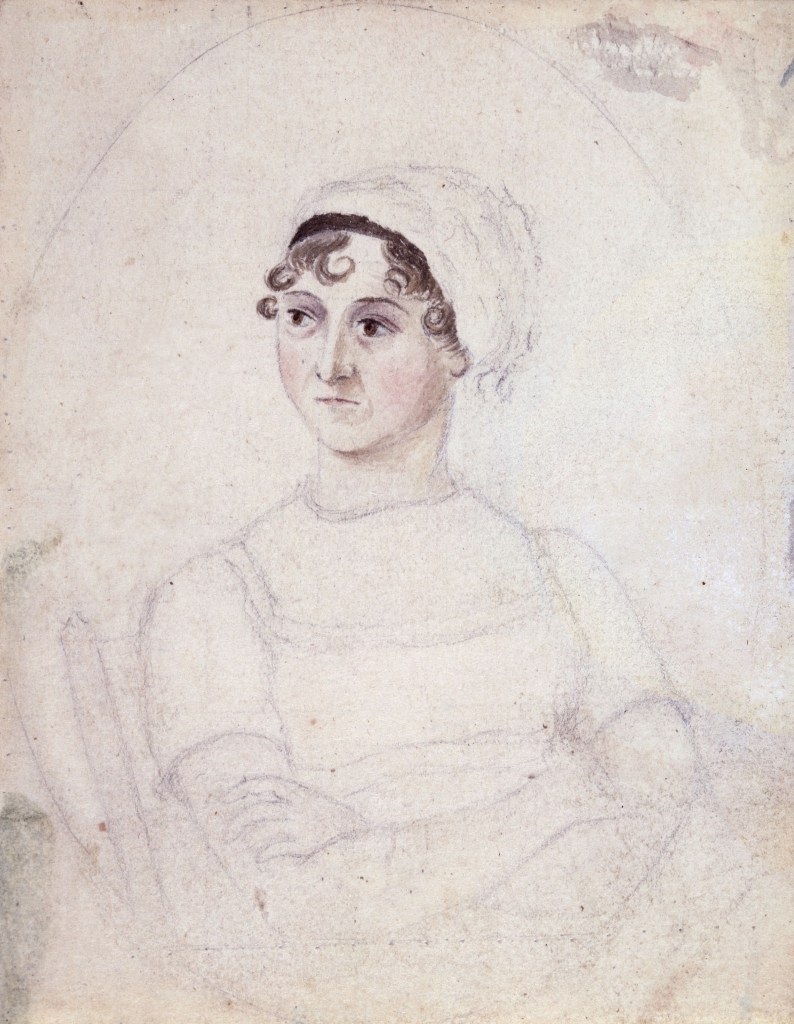
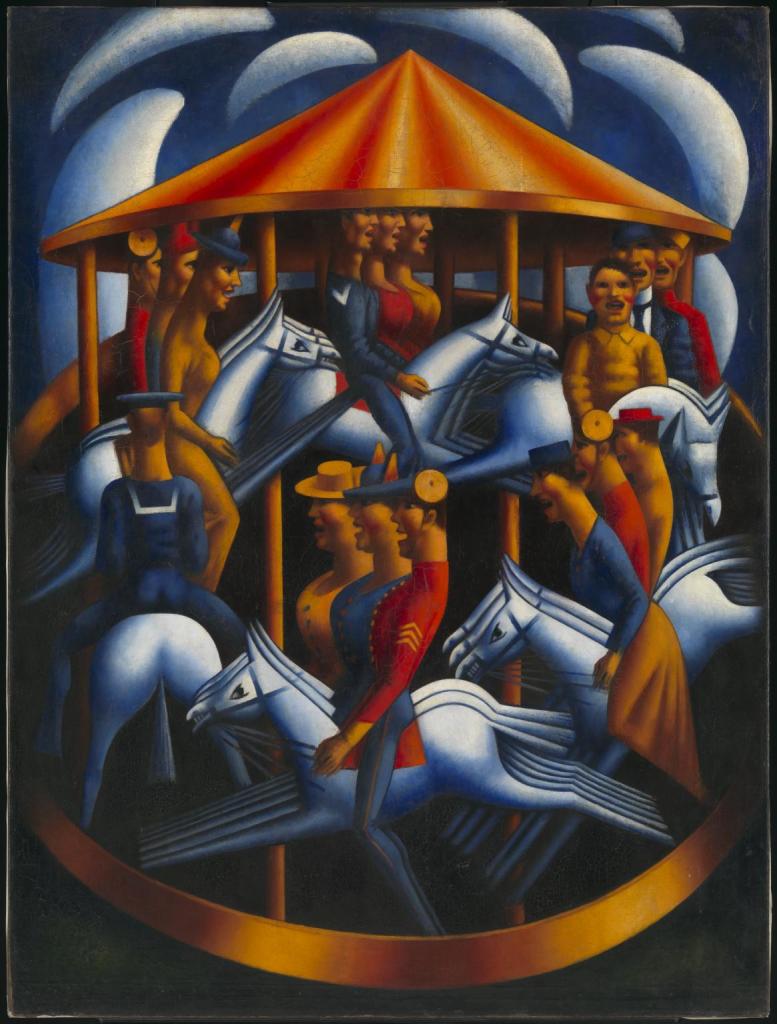
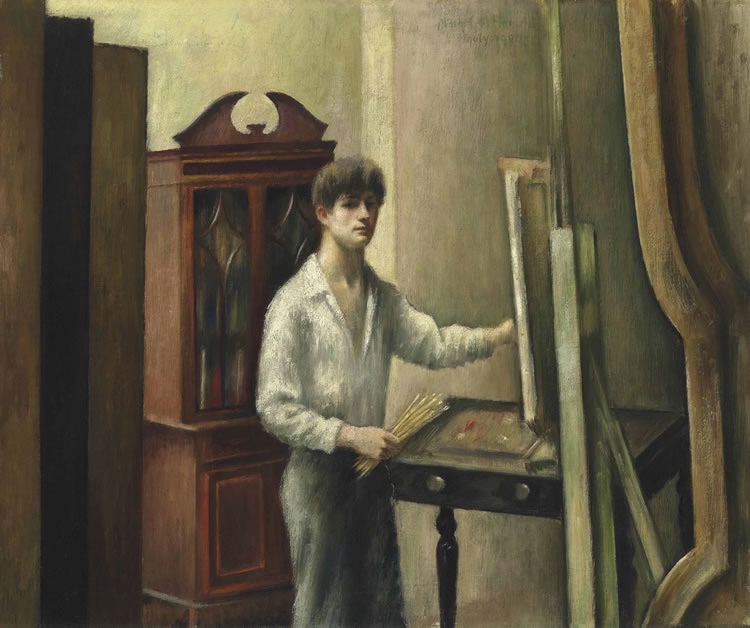
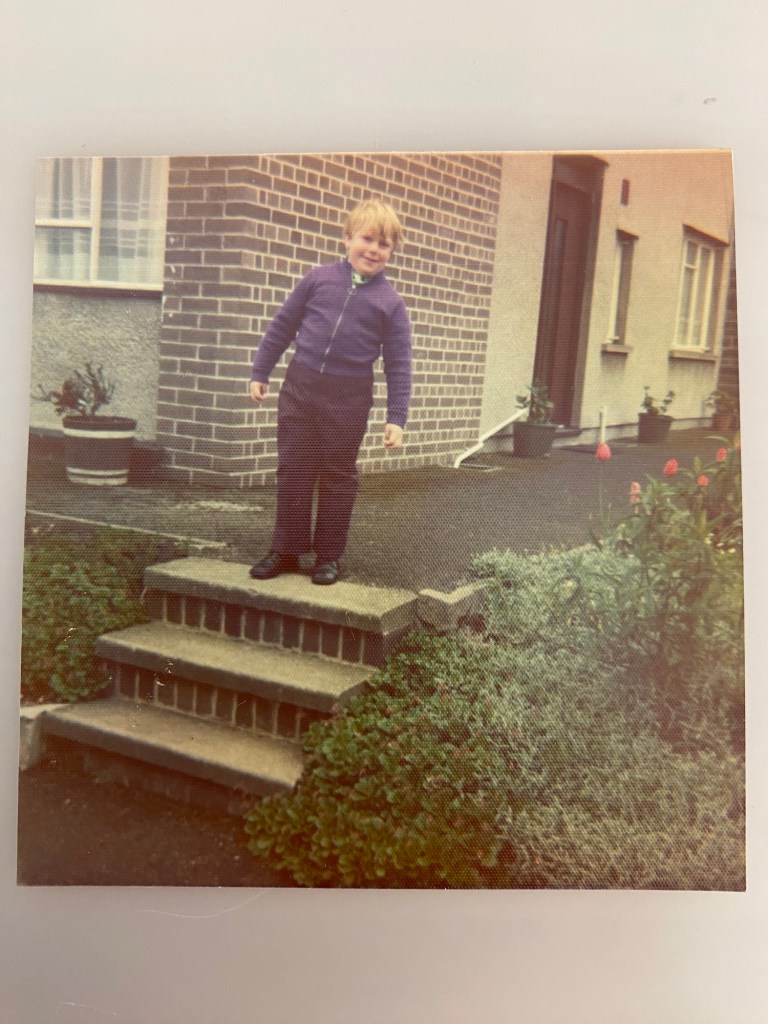
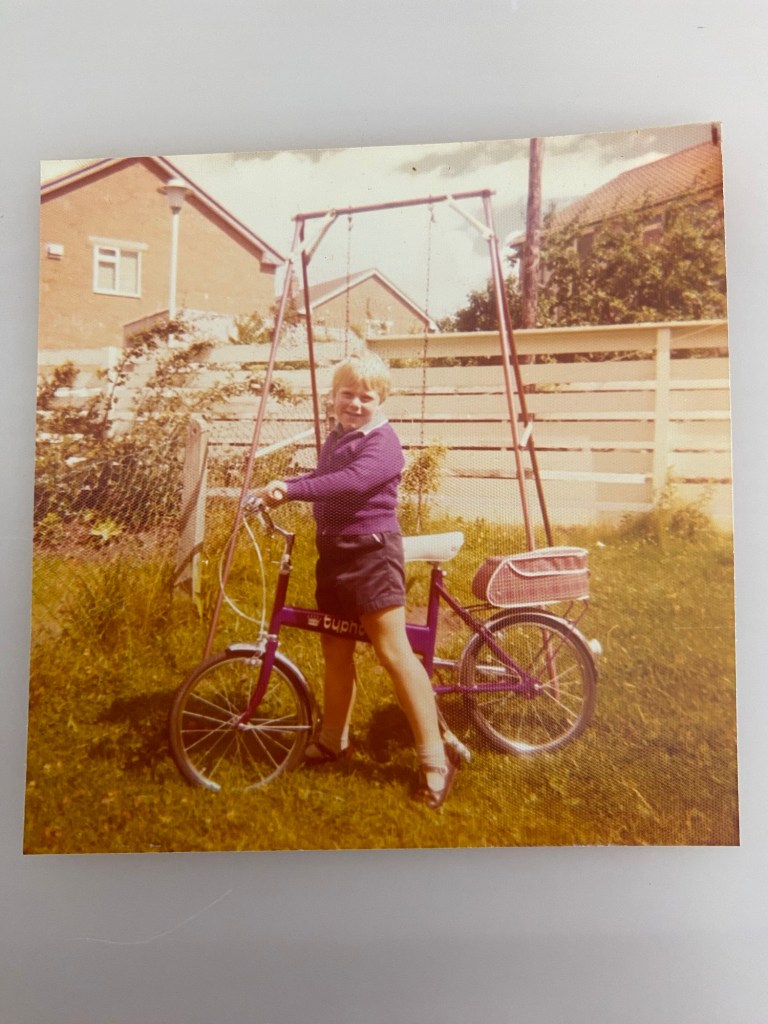
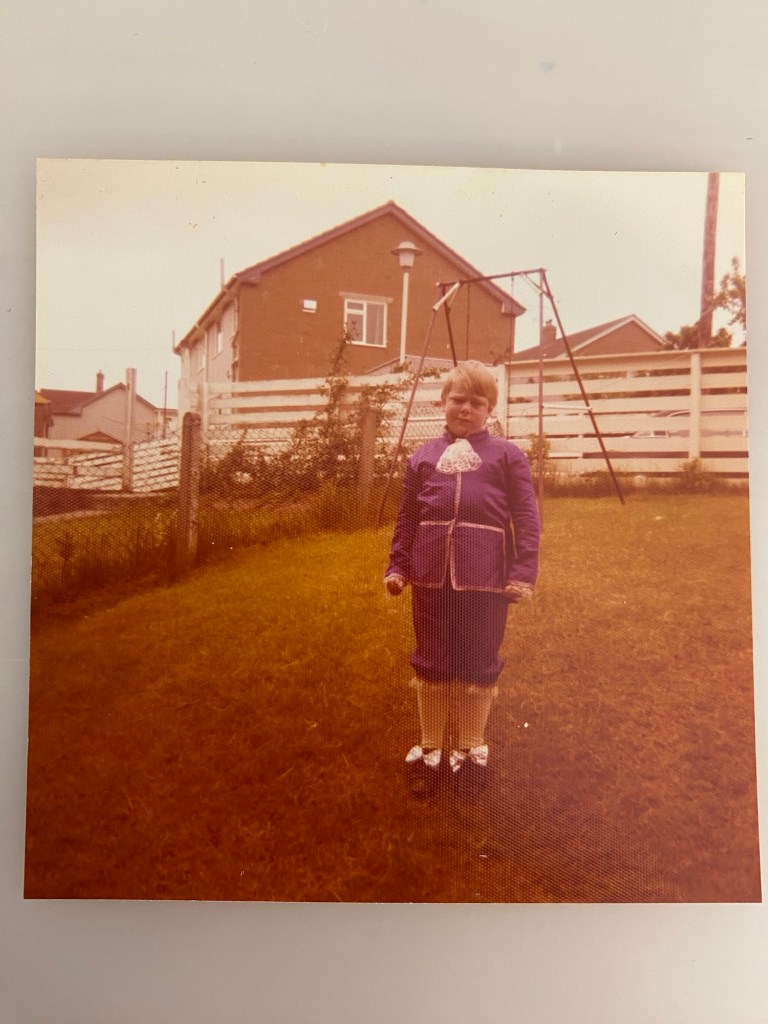


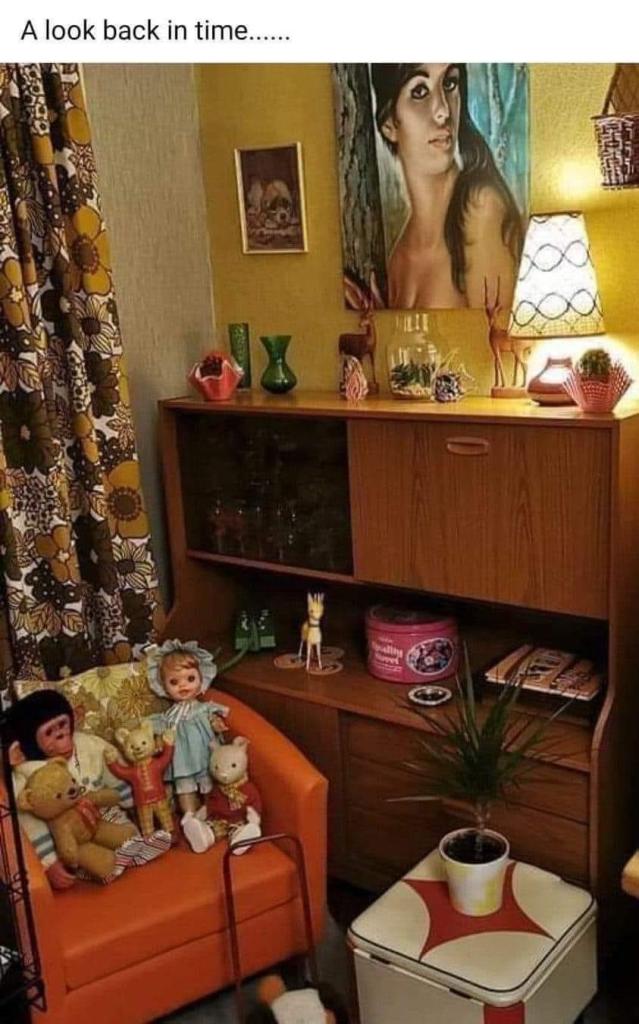



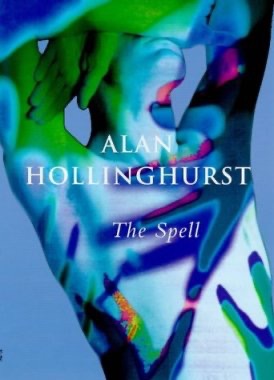


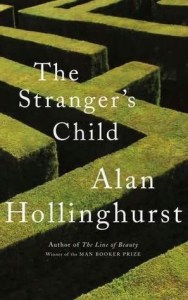
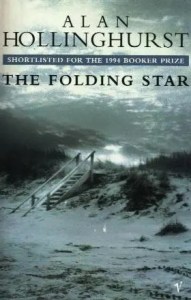

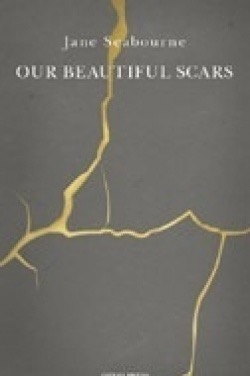

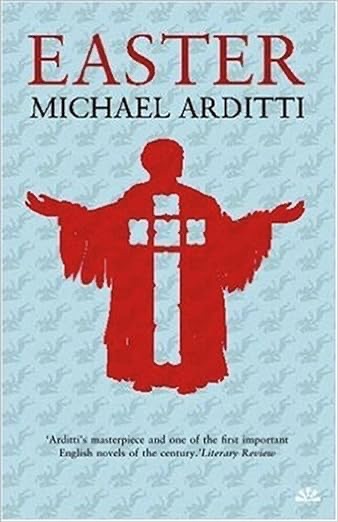


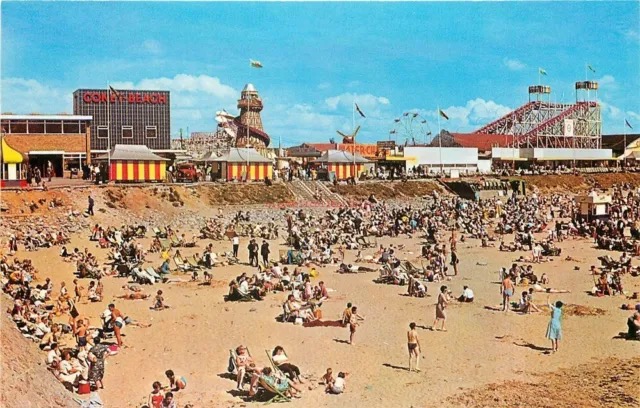
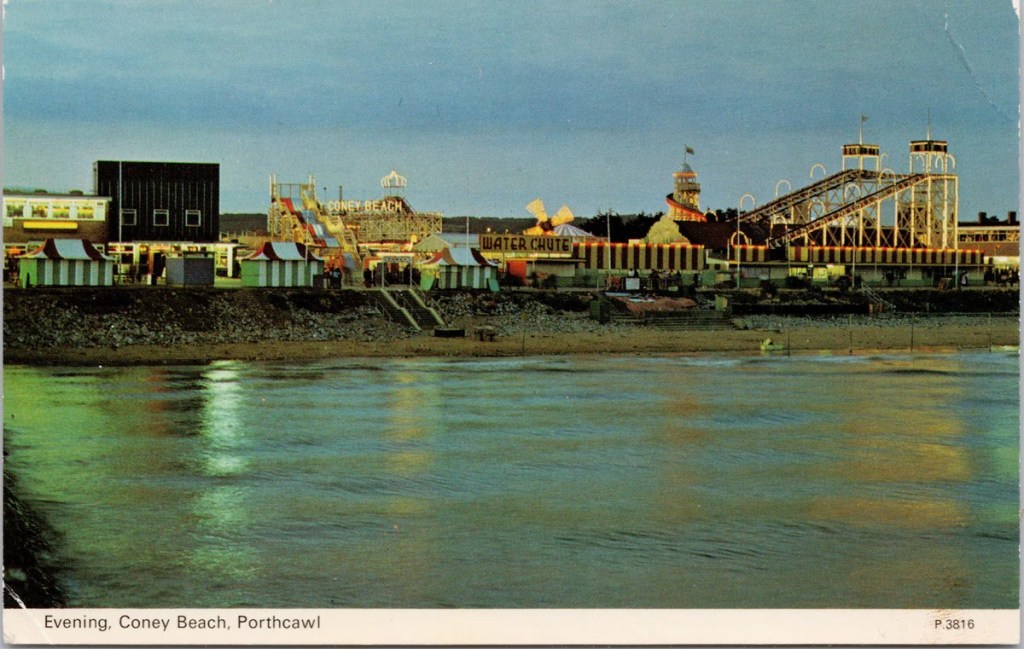
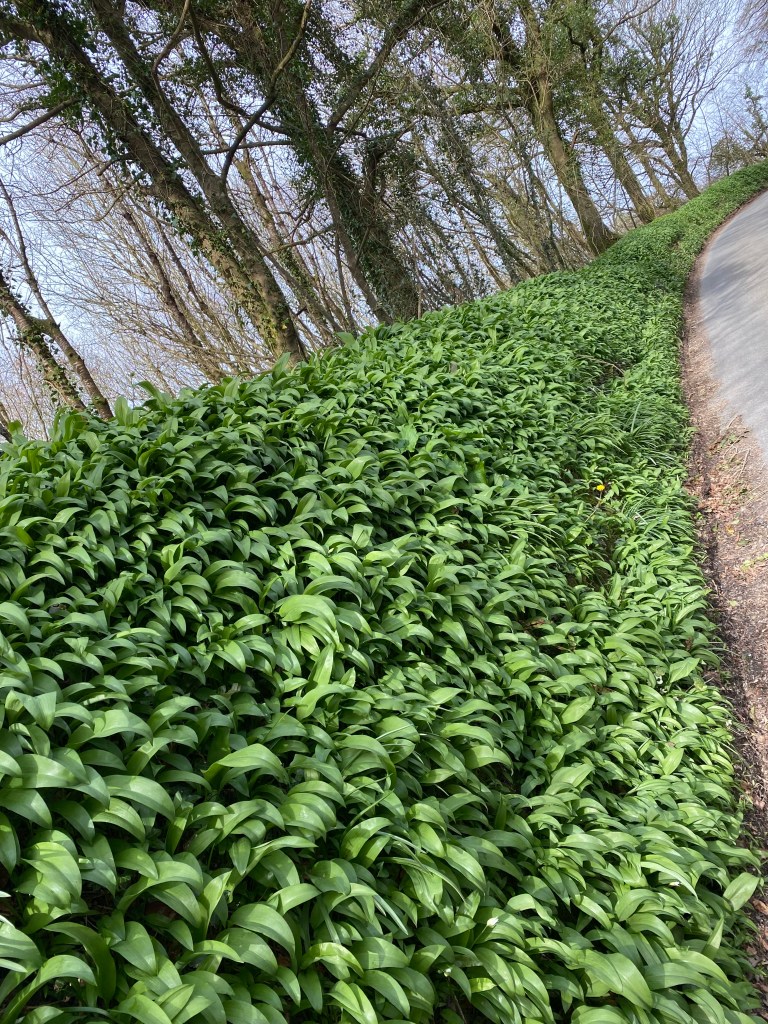
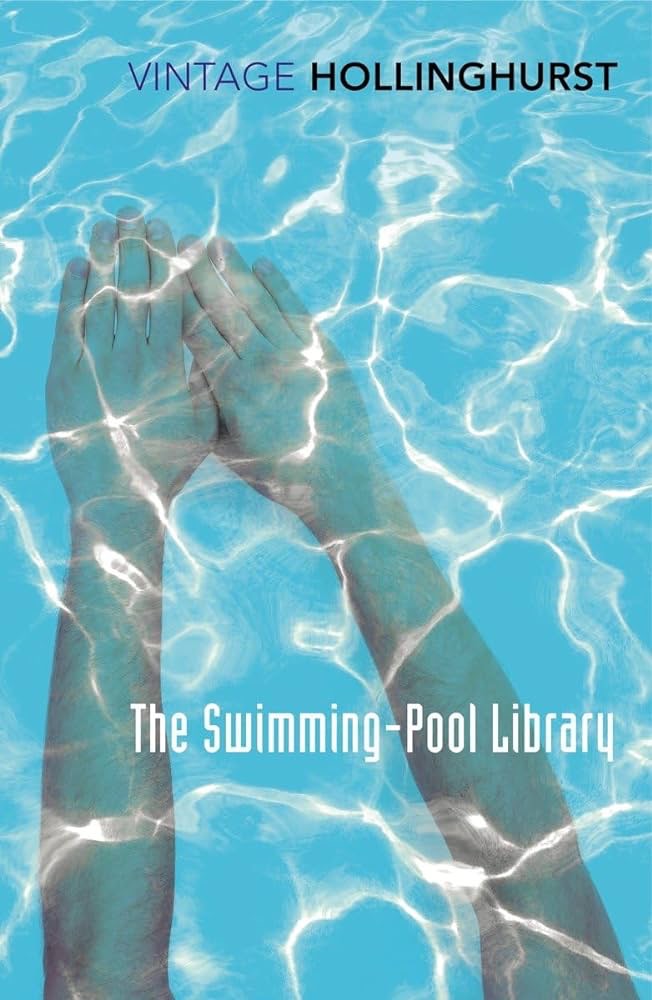






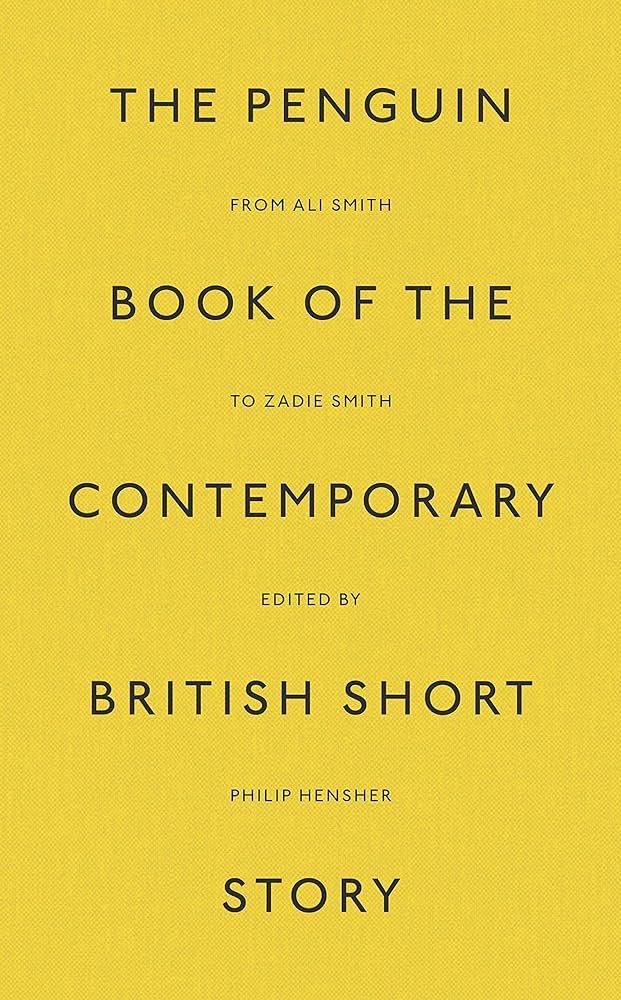












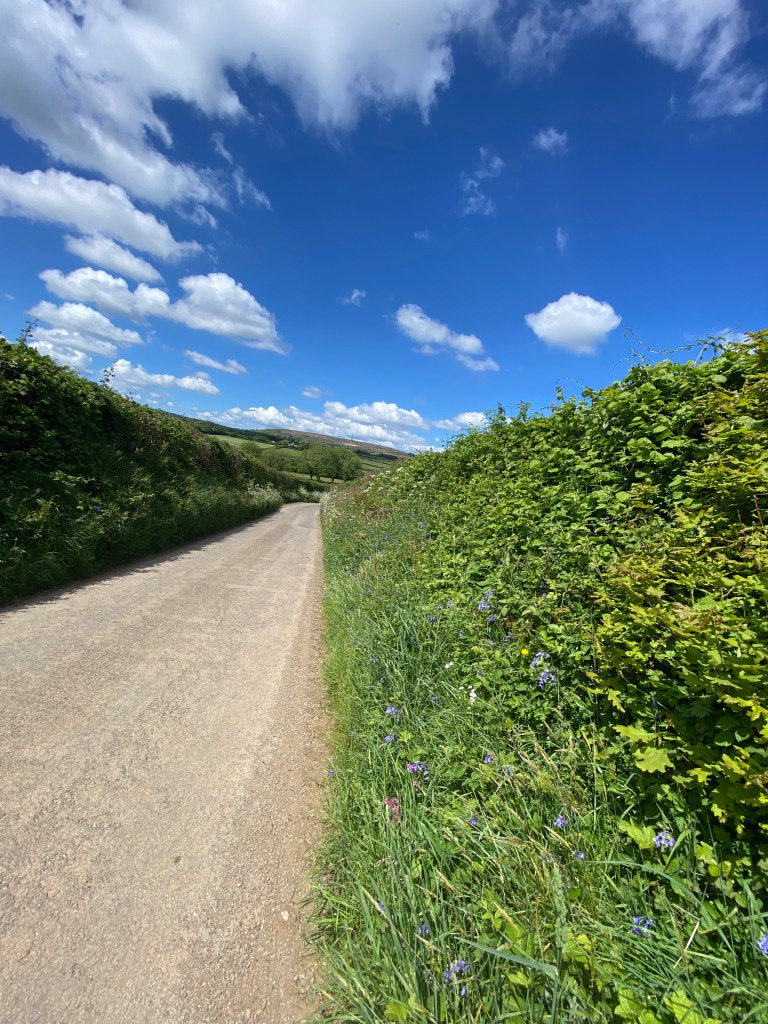
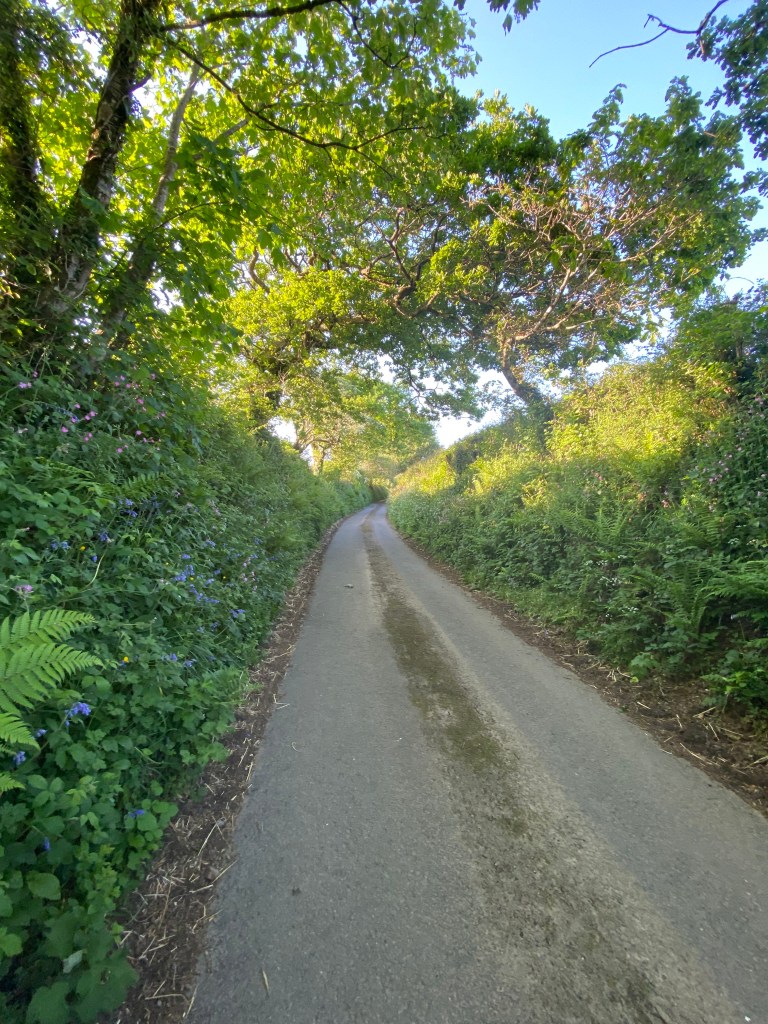

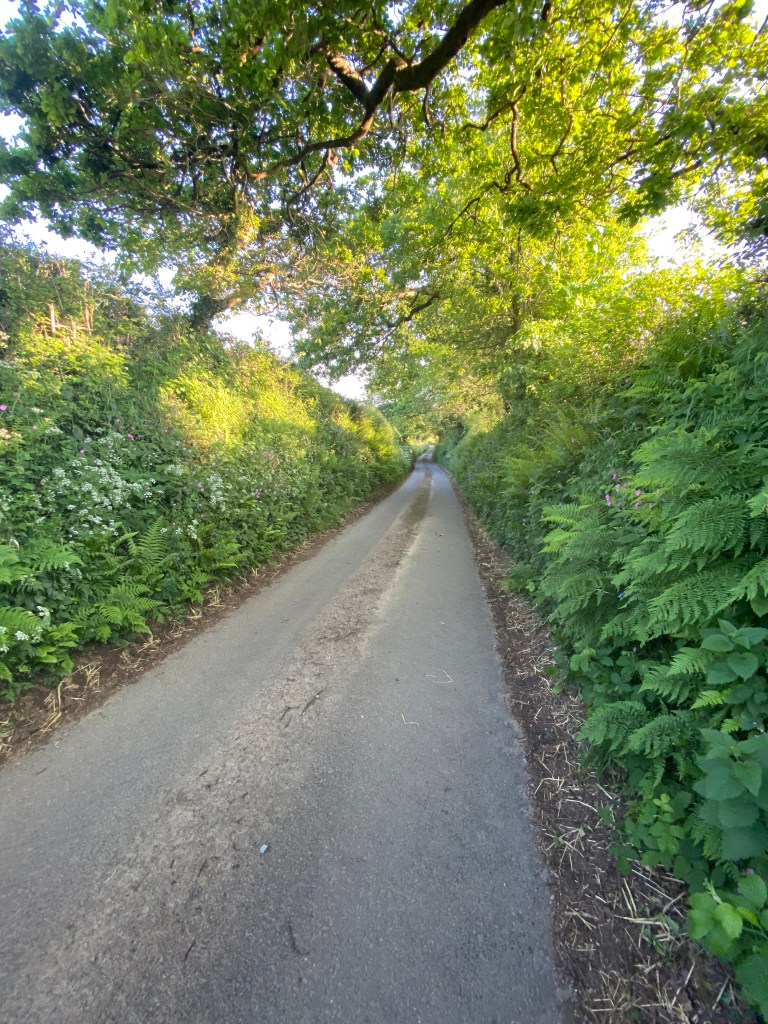
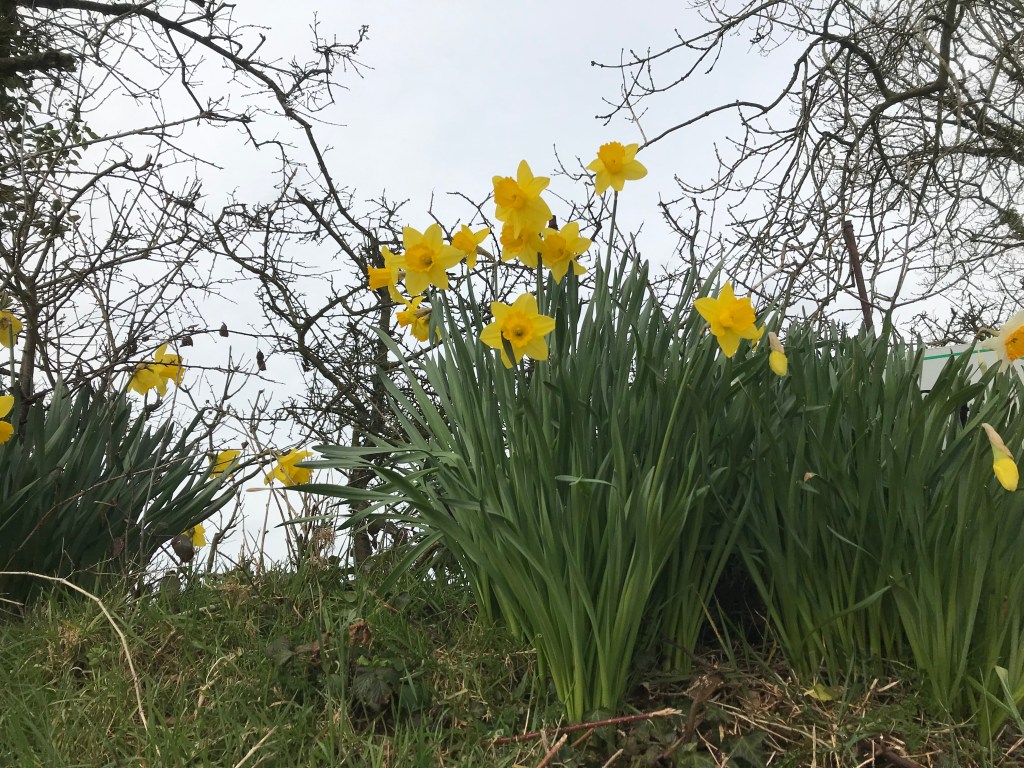
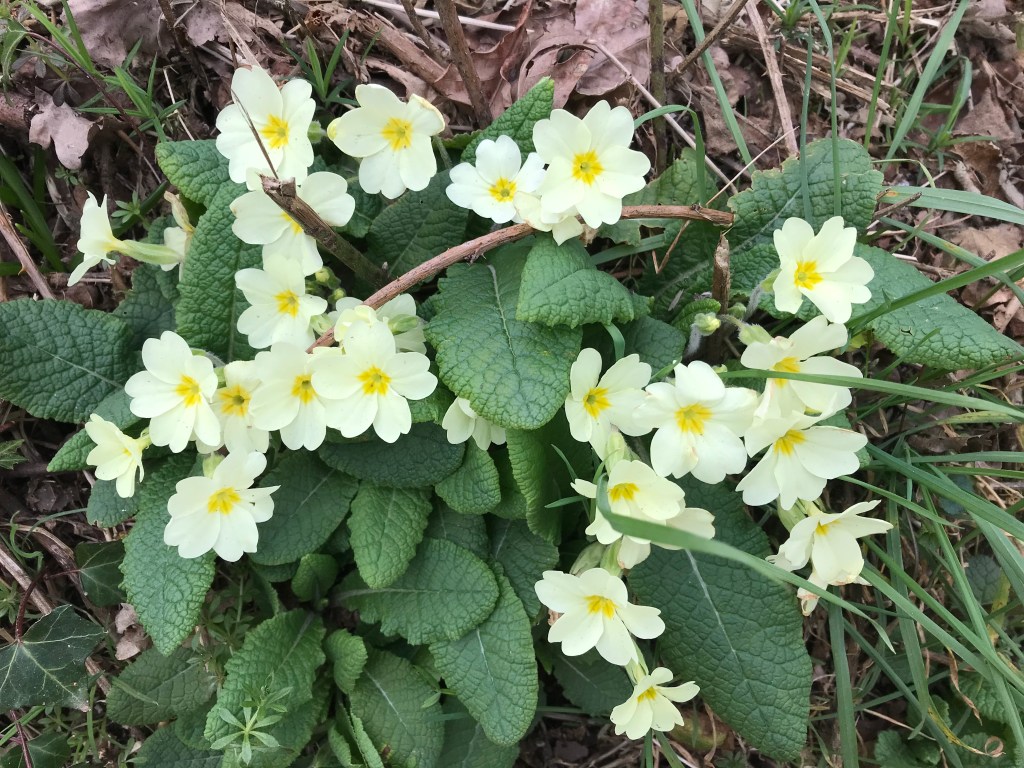
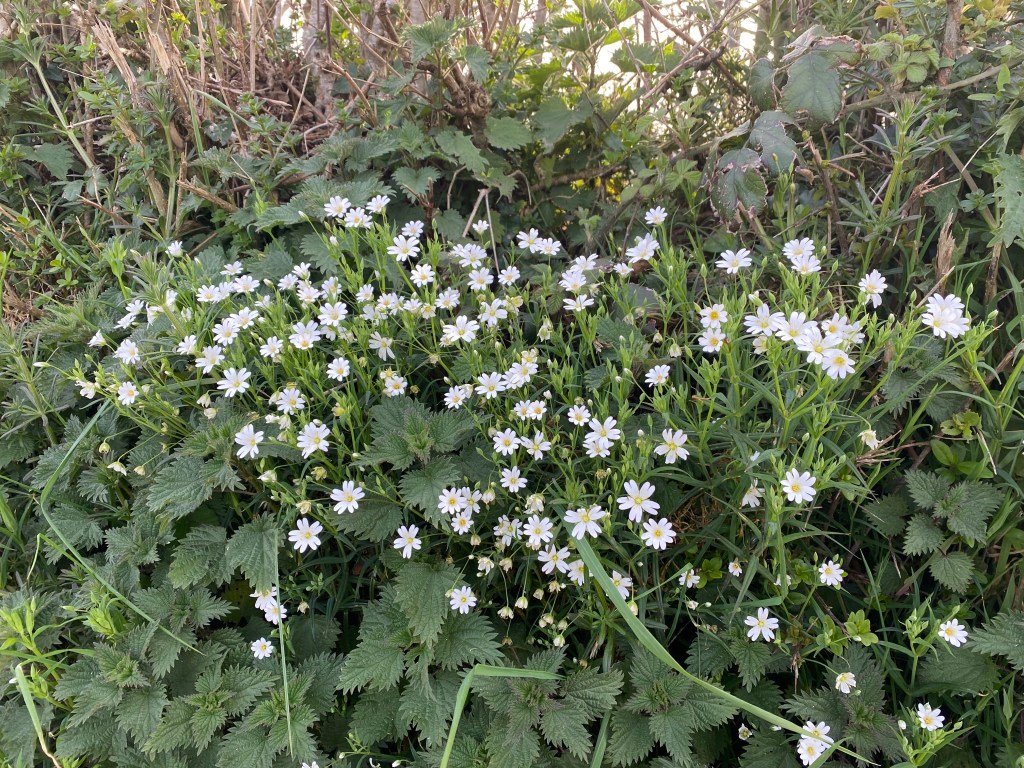
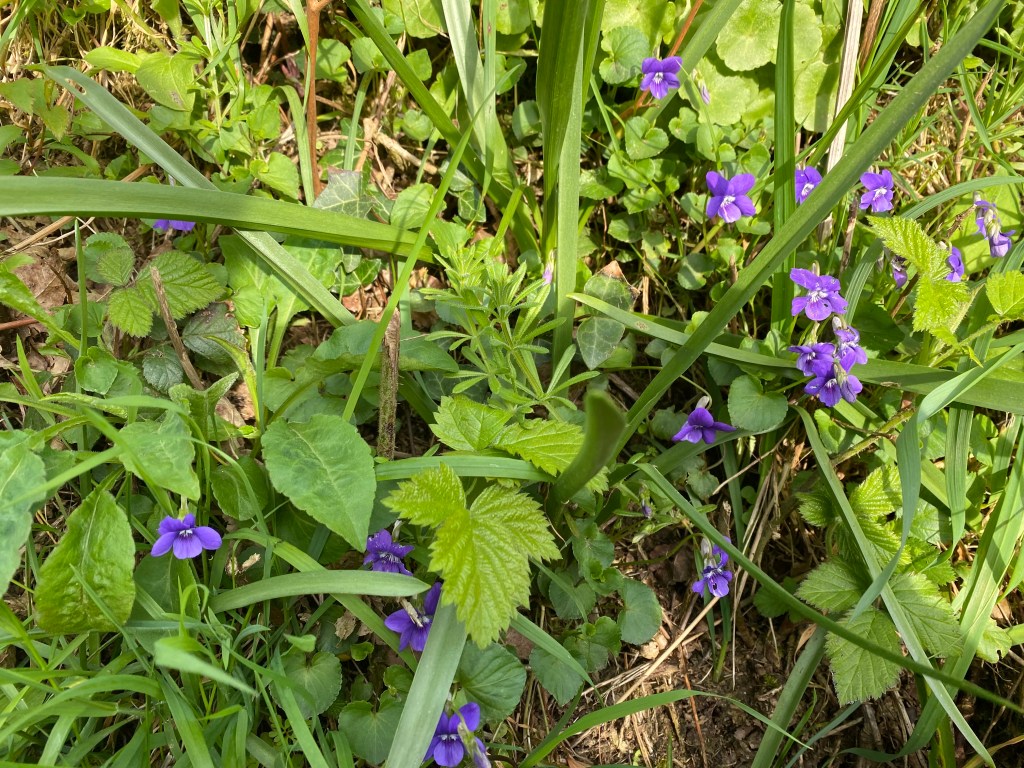


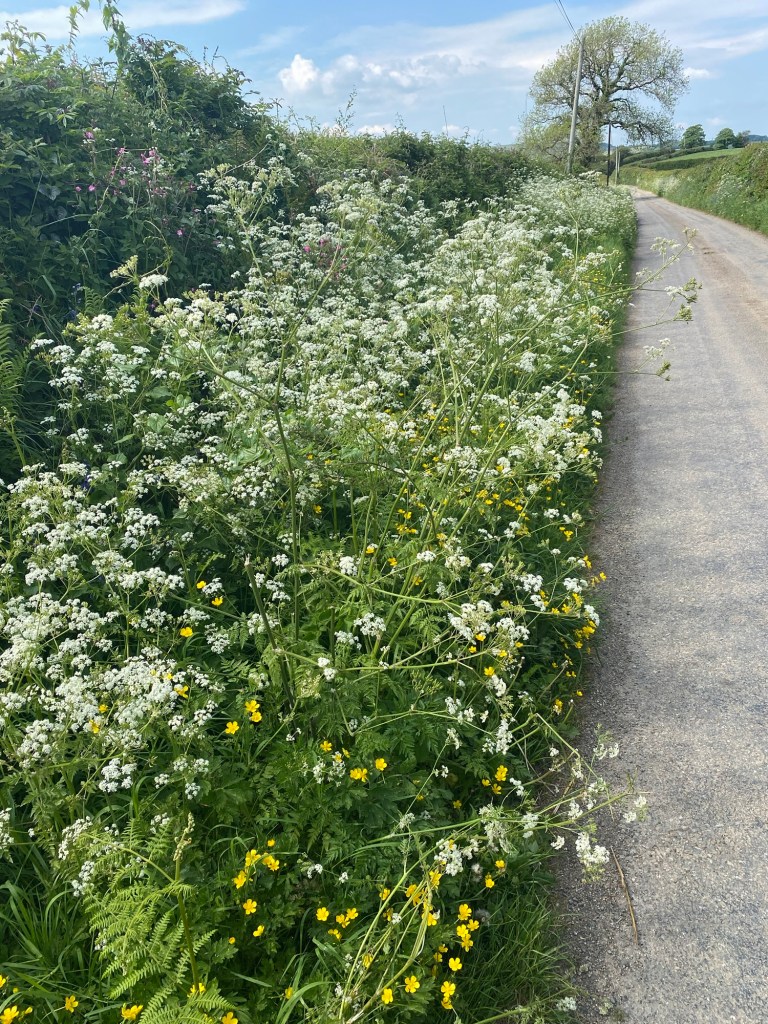




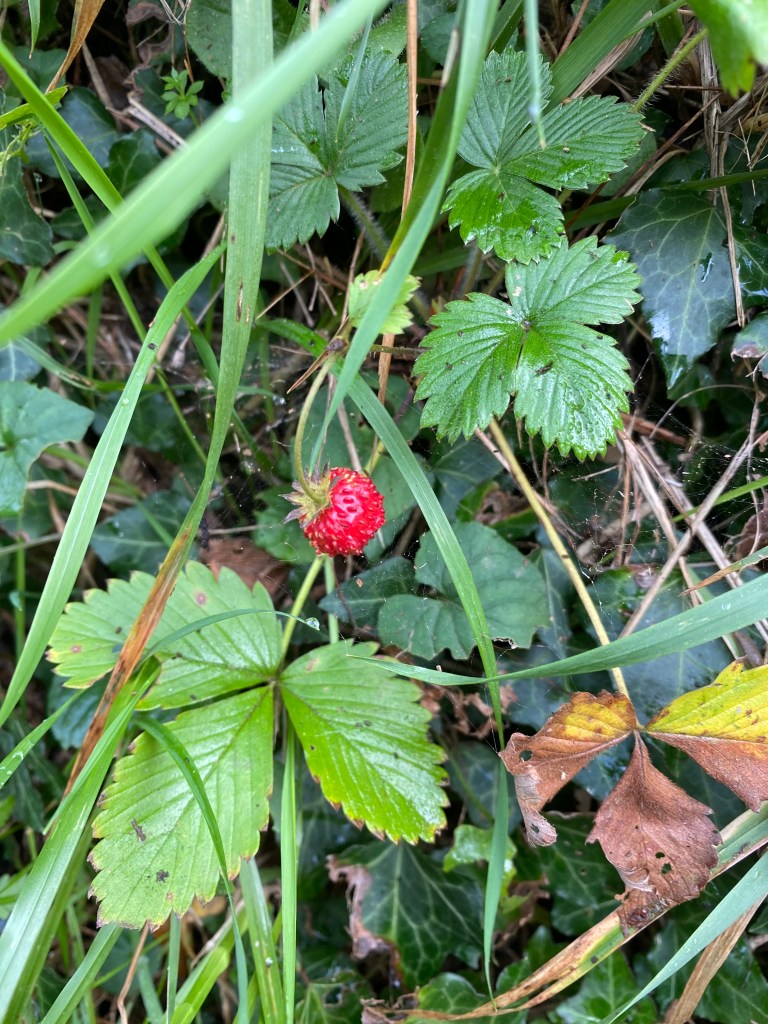

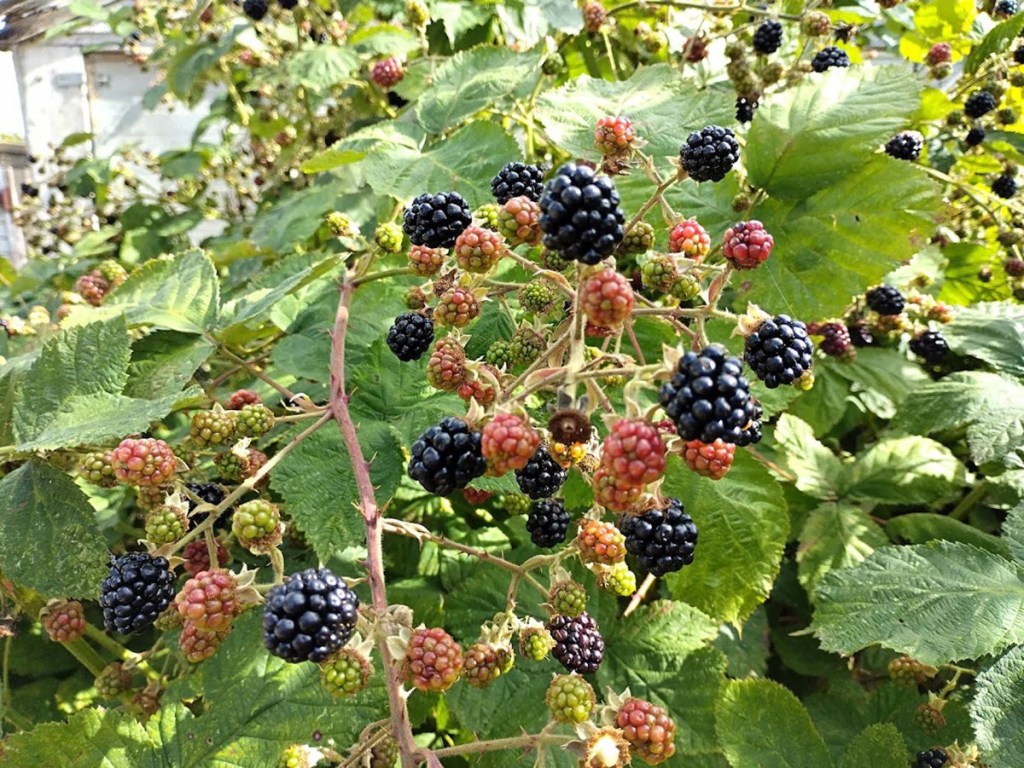

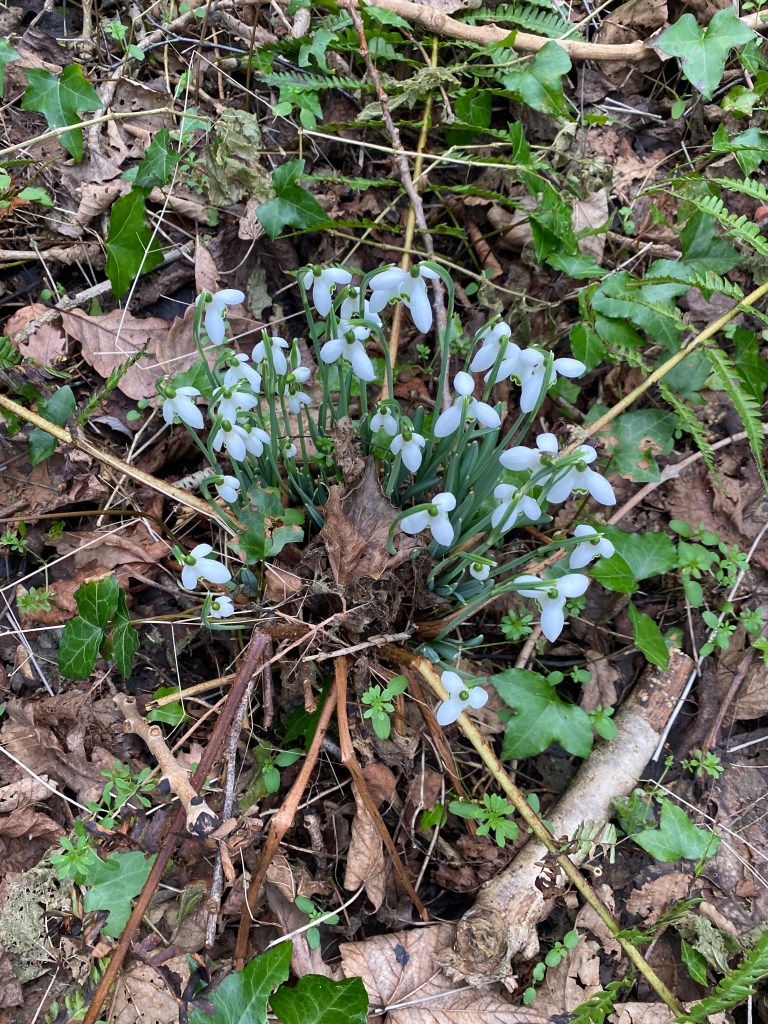


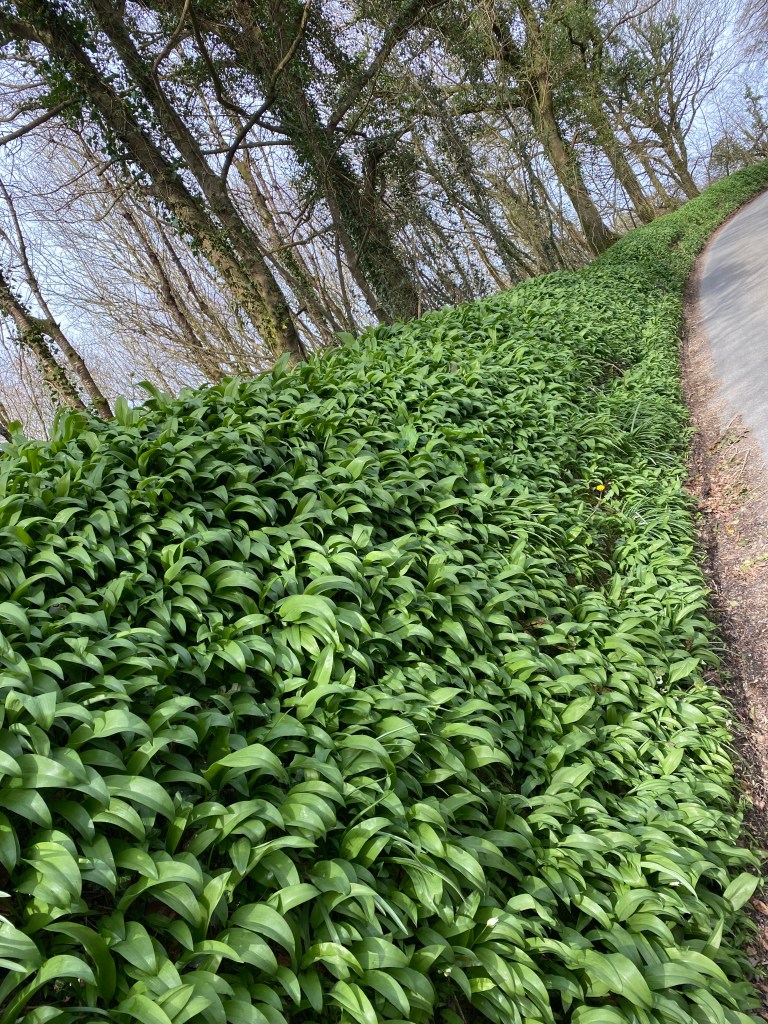
 Robert James-Robbins